
Curious Reads: Why is Dr. Dobson in the Epstein Files? (TW)
One of American Evangelicalism's favorite parenting experts has found himself in the infamous data drop. What do we make of it? (TRIGGER WARNING)

Hello friend, Liz here.
Every other week I write you a long essay related to American Christianity, culture, and politics. On the off weeks, I typically share something I’m reading, and I reflect on how that interacts with faith/politics/culture.
However, lately, politics have felt so urgent that it’s been all essays, all the time over here!
But I’m in the midst of writing book#2 about women protestors in American culture and in the Bible, and so I’m needing to go back to a (slightly) less demanding schedule—which means you’re going to be getting more “Curious Reads” editions of the Empathy List in your inbox. This week I have doozy for you… and it could’ve easily been its own Empathy List essay. 😅
#1 This week’s Top of the Fold is the Epstein Files—
in particular, my surprise at finding one of white American Evangelicalism’s favorite parenting experts mentioned in a text exchange between Jeffrey Epstein and an unnamed woman within the MILLIONS of pages that make up the DOJ’s case against the perpetrators of the biggest American sex trafficking ring… ever.
Yes, that’s right, Dr. James Dobson, founder of Focus on the Family, appears in the Epstein files.
Originally D.L. Mayfield alerted her followers to the fact that she found Dr. Dobson’s name in the files, and so I decided to head over to the DOJ website to see it for myself… and now I want to talk about it.
TLDR: Dr. Dobson does not appear as a perpetrator, but his writings become a tool of the perpetrators.
And before we begin, a TRIGGER WARNING: the texts I’m going to be examining mention sex, male anatomy, and imply sexual favors and/or abuse.
K, let’s get into it…
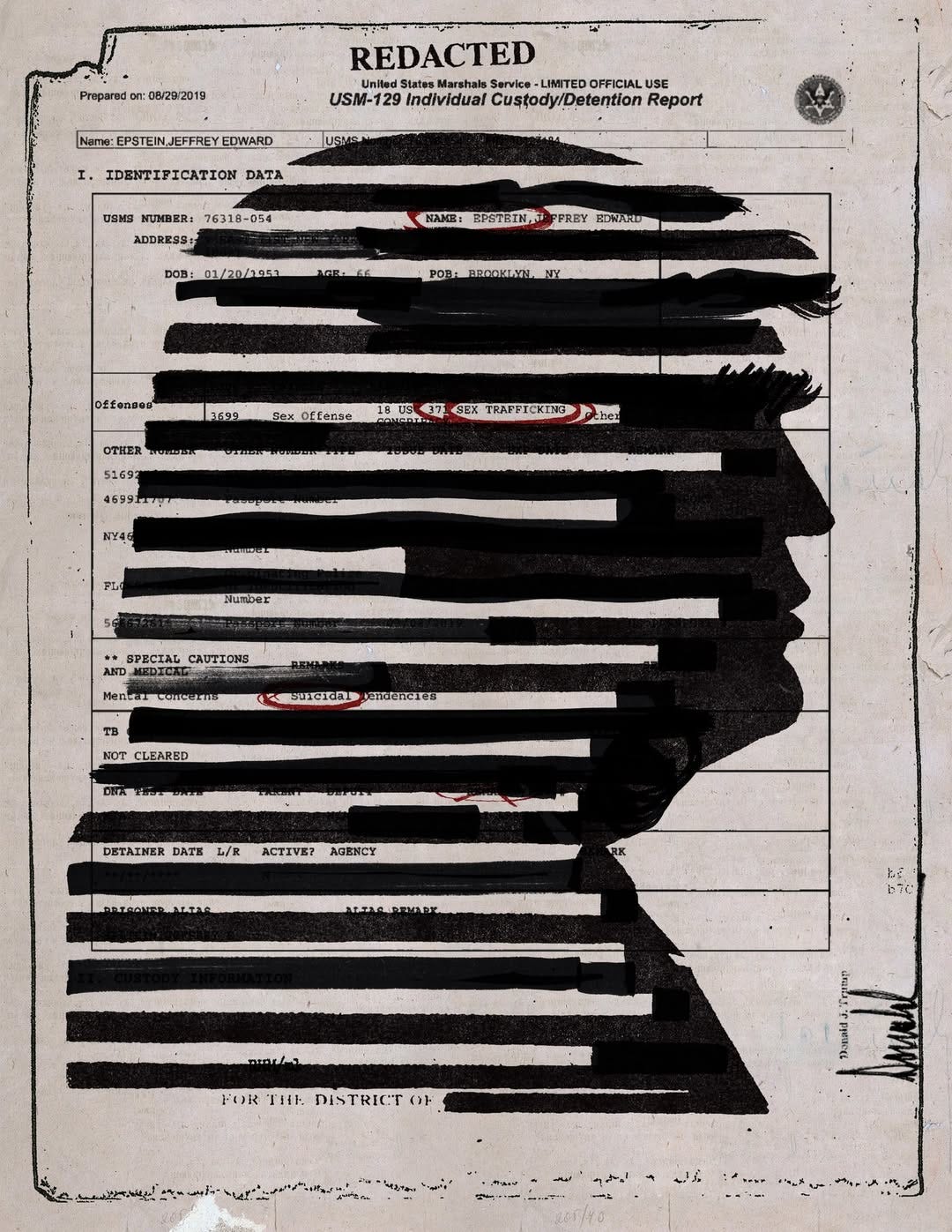
The Texts
So far, we know very little about the context of the texts that refer to Dr. Dobson except that they occurred in 2019 between Epstein and a woman. But here’s what we have (re: the DOJ website). And I’ll be summarizing the less relevant portions.
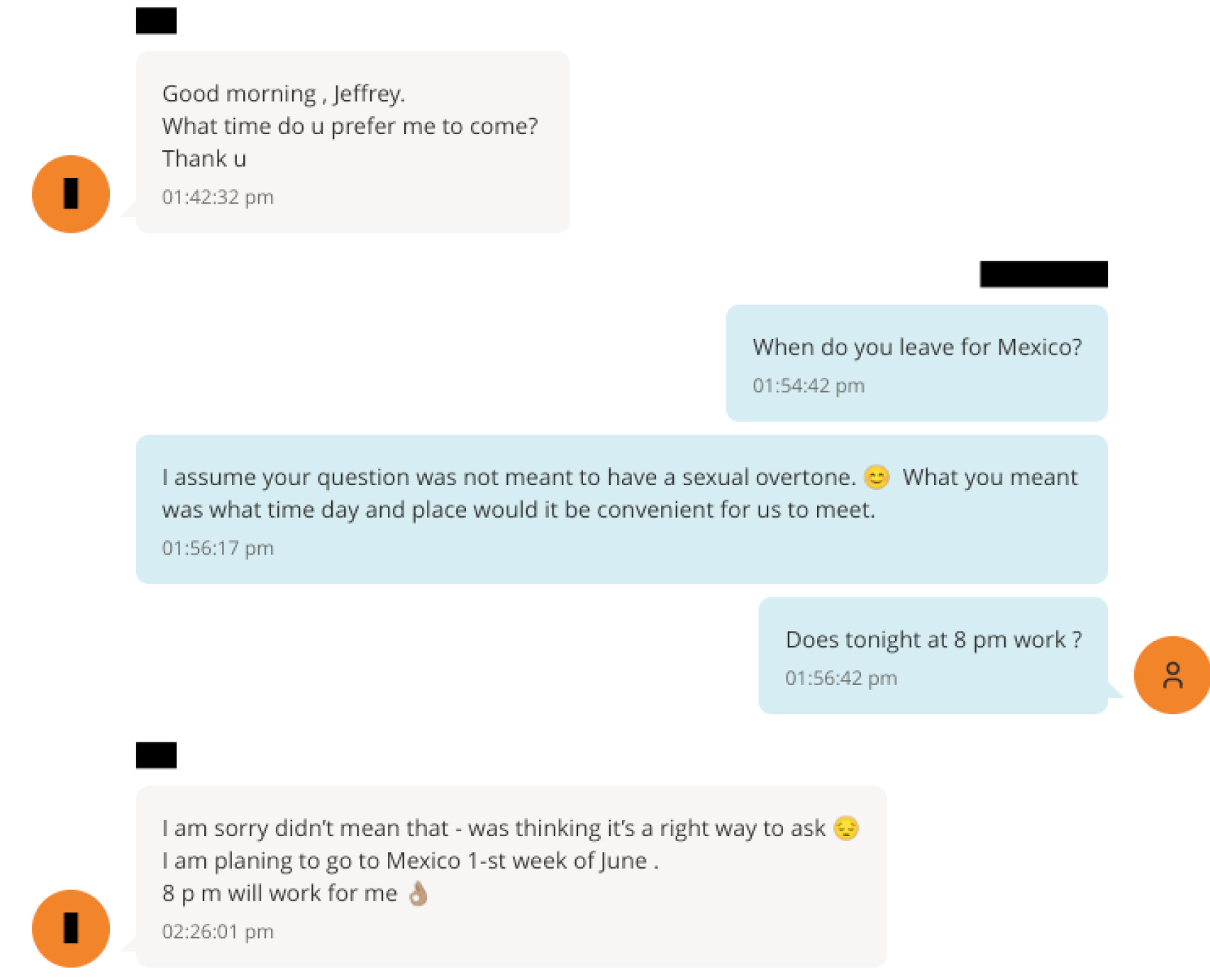
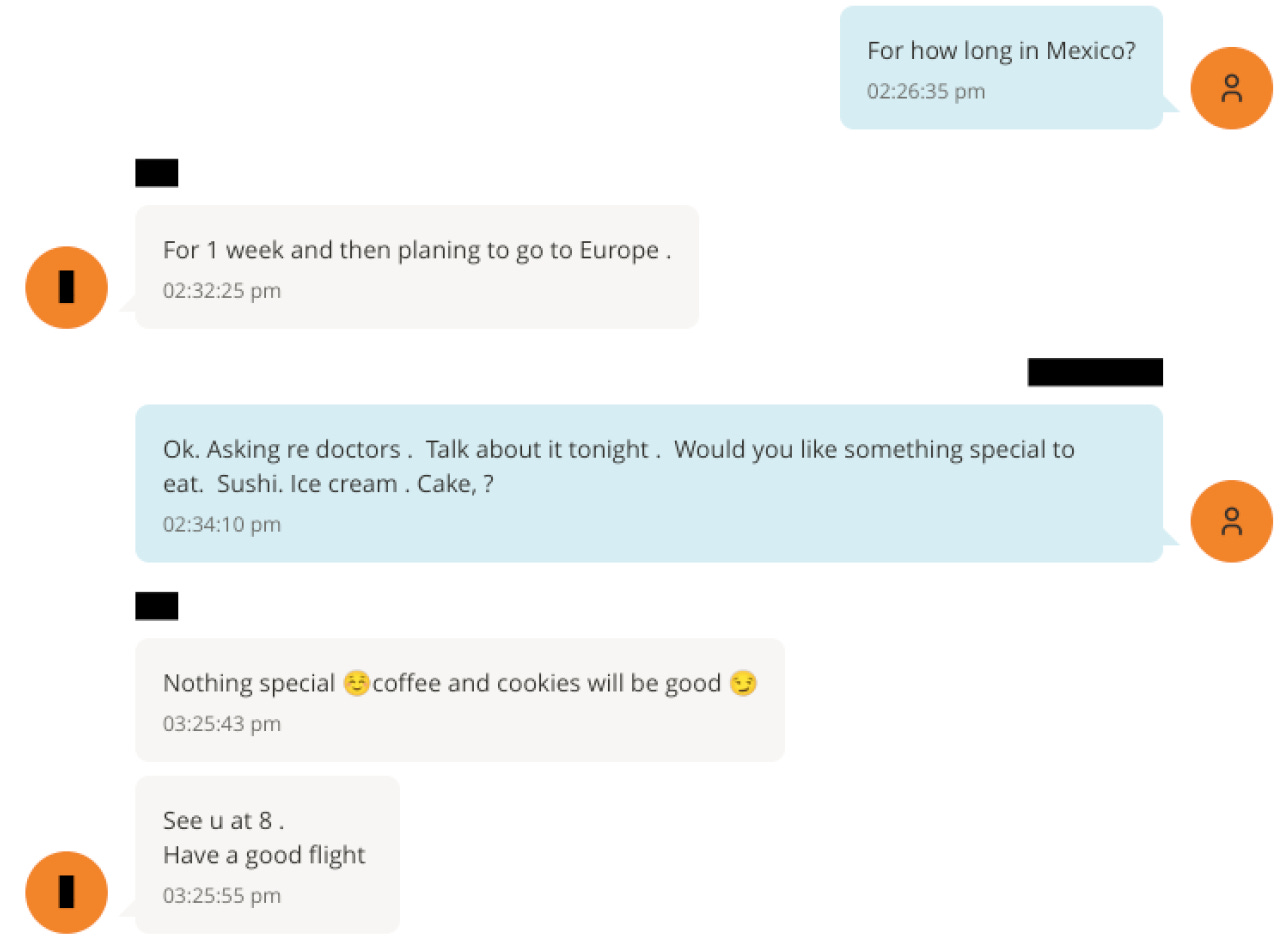
Pages 1-3: The woman makes plans to meet with Jeffrey in Mexico. Jeffrey makes a lude joke that makes the woman feel she has mistranslated her question (she seems not to be a native English speaker), though she hasn’t. It’s just a dirty old man thinking dirty about ordinary words (She says, “What time do u prefer me to come?” 🙄) They discuss their plans and Jeffrey asks about her itinerary “re doctors” (He’s bringing her to a doctor in Mexico?? Why???). Then they evidently have been together and parted, and the texts start up again. The woman sends a text to thank Jeffrey for “your time and your advices !”
Here’s where Jeffrey’s “advice” to this woman turns explicit. [TRIGGER WARNING]
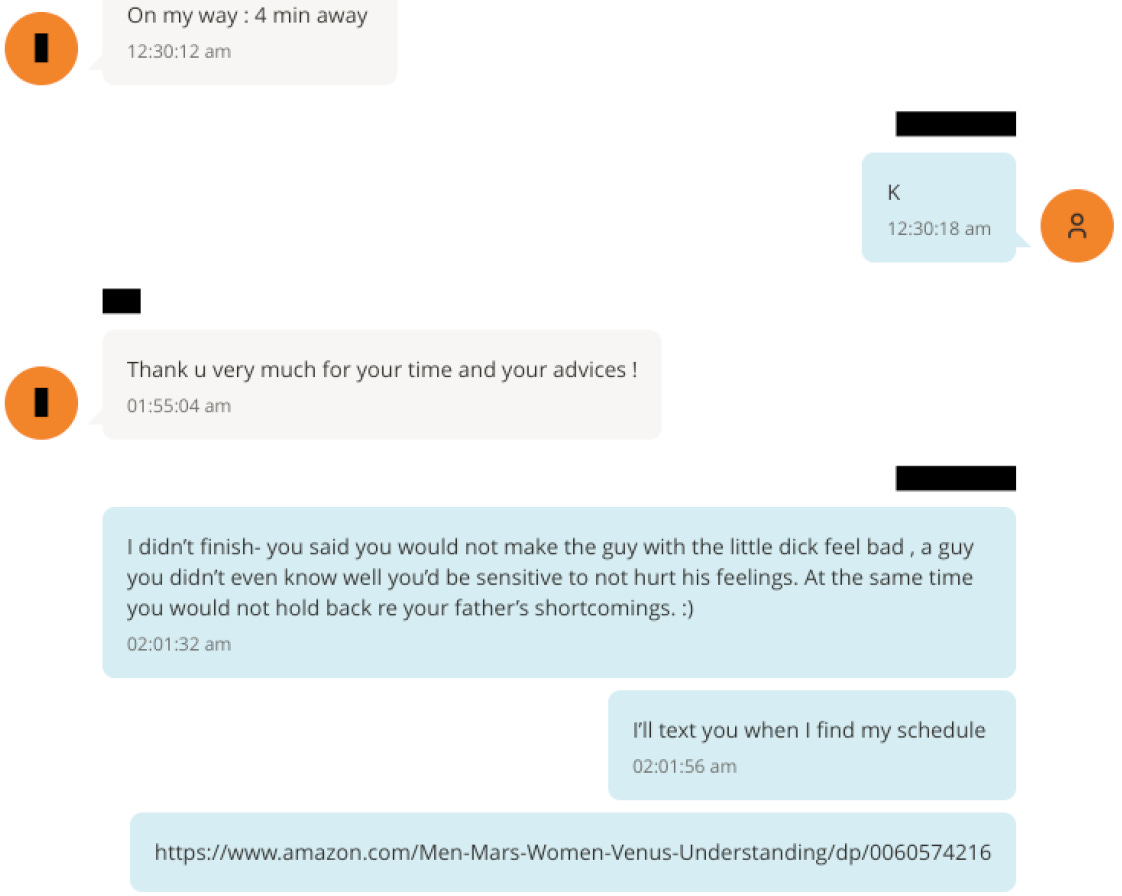
He mentions a conversation they’d begun about her father, with whom she evidently has a poor relationship. She has expressed that she “would not hold back” when discussing her “father’s shortcomings”. Jeffrey is challenging her about inconsistency he sees in her—for example, she had told Jeffrey that she wouldn’t ever “make the guy with the little dick feel bad” because she’d not want to “hurt his feelings.” [Liz’s note: is this a real life example Jeffrey’s referencing? Or just a way of grooming her? We don’t know.] Jeffrey wonders, why would she care more about “the guy with the little dick” than her own father? Jeffrey wants her to consider her father’s feelings. (Jeffrey then shares an Amazon link to the pop psychology book, Men are from Mars, Women are from Venus, lol).
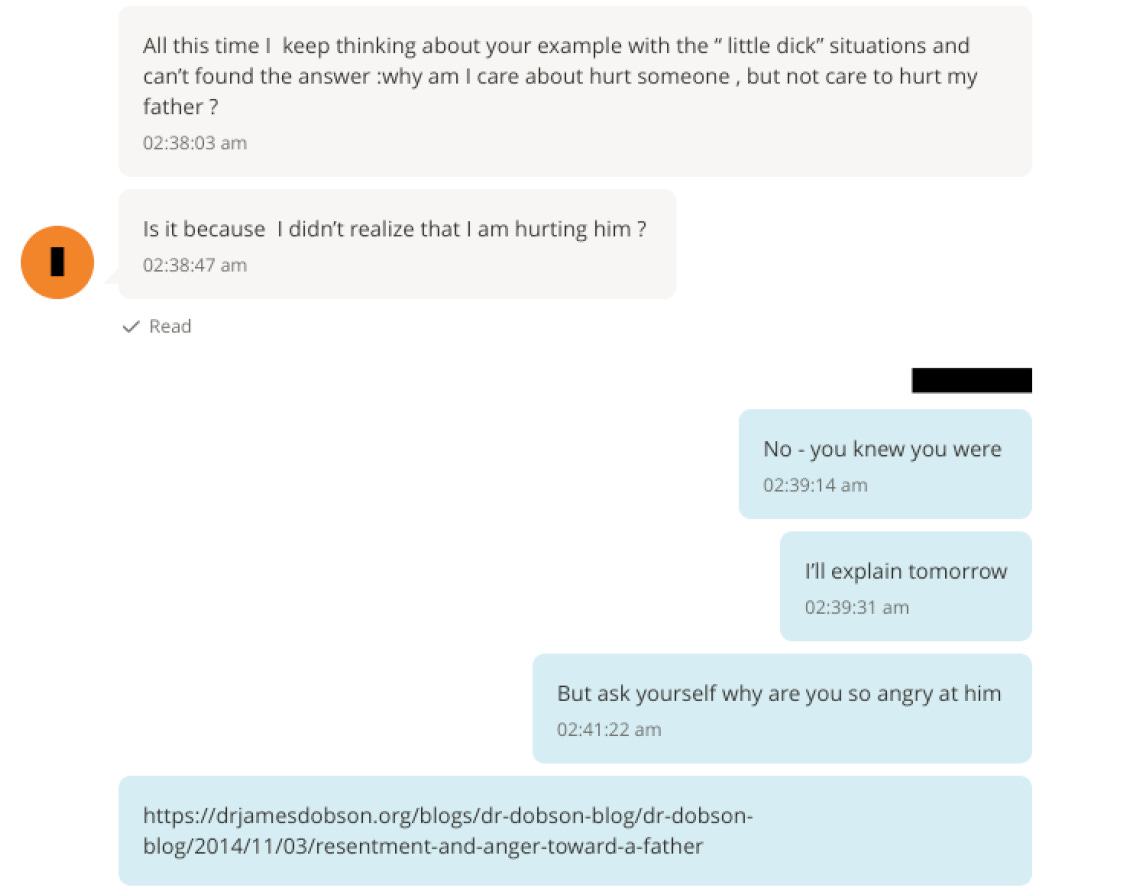
Page 4: The woman texts back: “All this time I keep thinking about your example with the ‘ little dick’ situations…” The woman says she cannot understand herself. Why does she treat her father differently than she does other men she’s encountered? She writes, “:why am I care about hurt someone , but not care to hurt my father ? Is it because I didn’t realize that I am hurting him ?” Jeffrey texts back confidently, no, you meant to hurt your dad, of course, and he says, “I’ll explain tomorrow.” They have plans to meet again. He continues: “But ask yourself why are you so angry at him”.
THEN JEFFREY EPSTEIN SENDS THIS WOMAN TO A BLOG POST ON DOBSON’s PERSONAL WEBSITE.

I’m not joking. And the post is still live on Dr. Dobson’s own website. The blog title: “Resentment and Anger Toward a Father.”
I’ll get to the content of Dobson’s blog post in a minute.
But the text exchange continues. [And takes another disturbing turn, so if you want to skip down, I won’t blame you. Epstein basically propositions her.]
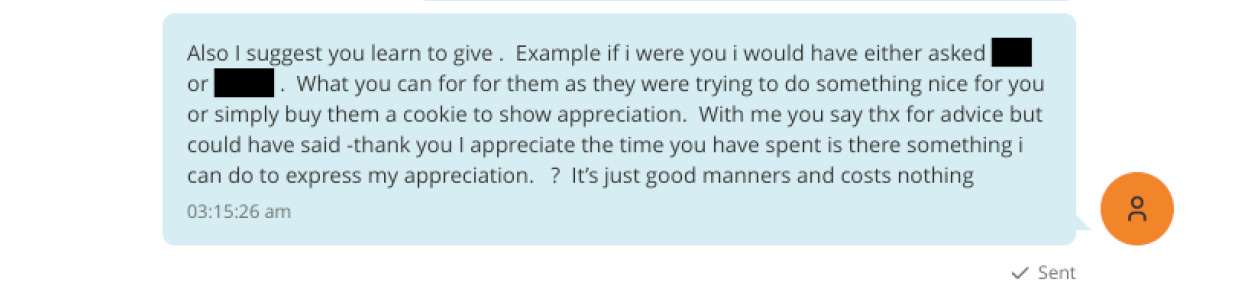
Page 5: Jeffrey tells this woman, “Also I suggest you learn to give.” He says that she should seek to be more accommodating and grateful to those who have shown her kindness. “Buy them a cookie to show appreciation,” he suggests. Or, then again, you can ask a solicitous question to discover what your friend wants: “With me you say thx for advice,” says Jeffrey, “but could have said - thank you I appreciate the time you have spent is there something I do to express my appreciation. ? It’s just good manners and costs nothing”.
That’s it, that’s the end of the exchange. Although knowing more of the character of this man, I find myself deeply unsettled with the advice Jeffrey offers.
Because Jeffrey Epstein seems to be implying, if you’re truly grateful to your benefactors, you will comply with their requests, no matter how outlandish, how degrading, how demanding. And, he suggests, he’s happy to accept alternate forms of payment, such as, you know, a cookie. What could be more innocent? Gratitude does not need to cost this woman a thing, and after all, it’s only good manners.
BARF.
Before we even read the words of Dr. Dobson, I already see how his advice is being used to manipulate a woman into doing whatever her older, wealthy, connected male benefactor wants.
And who knows what horrific requests Epstein makes of this woman from this point onward.
The Article
But let’s turn to Dobson’s article. Why did this article by Dr. Dobson appeal to the serial rapist and sex trafficker, Jeffrey Epstein? What made Epstein share the advice of American Evangelicalism’s favorite child psychologist with a woman he was grooming?
Entitled “Resentment and Anger Toward a Father,” Dobson fields a letter from a reader who says she is wrestling with resentment and anger toward her father “for what he did to me and my mother when I was a child.” She calls her feelings deep, she says she is in pain, and she clarifies ramifications for her father’s actions that have harmed both herself and “the rest of our family.” She says, “I don’t want to hurt him, but I can’t forget…” And she asks for Dobson’s advice in resolving this problem.
In his answer, Dr. Dobson makes a variety of assumptions that go unaddressed. For one, he assumes the father’s offense is not criminal or felonious. He assumes the father presents no active danger to the family members. He assumes that the problem should be resolved “in the family” without seeking outside help. He assumes that the problem lies primarily within the letter-writer’s control.
Dobson also never suggests that the woman may have a reason to be angry, and he does not console the woman for the pain she has experienced.
Probably, he assumes, the woman just cannot understand men, and she needs to learn the differences between men and women. She needs a male point-of-view.
…Of course, as he must know, people who write anonymous letters to famous psychologists to fix their problems are coping well and only have minor problems that can be solved in a single advice column, amiright?
Dobson’s advice begins by referencing one of his books immediately (What Wives Wish Their Husbands Knew About Women, and no, I’m not linking to it) and he mentions another at the end of the post (turns out, this entire post is an excerpt from Dobson’s book, Emotions: Can You Trust Them? BTW if you have to ask that question, I already know your answer, and I don’t trust YOU.)
And then he addresses the question the letter-writer has asked. He begins by saying, “After laying the matter before God and asking for His healing touch… I would suggest that you examine the perspective in which you see your Dad.”
[Liz’s note: ew, “His healing touch?” Why did I ever think this was a normal thing to say as an evangelical?]
Dobson says, the way you’re thinking about this is all wrong. Try to think of your pain from your dad’s perspective.
Dobson then relates the story of a female friend of his, Martha, and her difficult relationship with her father. Her father was emotionally neglectful, Dobson explains. For example, her infant son dies within a week of birth, and “her insensitive father” doesn’t attend the funeral. Also, her father doesn’t bother to correspond with her or her kids, and now, he’s skipping her other son’s wedding.
But good news! Dobson solved her problem when he wrote her a direct note confronting her bad attitude, and Martha liked what he said so much that she shared it with several friends (who had their own experiences of people “failing” them, Dobson explains, and yes, the quotation marks are his). Martha even gave Dobson permission to share her story in one of his books, that’s how much she loved his advice.
[Side note: Dobson reprints this letter VERBATIM, including both Martha’s last name AND her son’s name in the reprint, and just from a publishing perspective, I’m shocked that the legal departments involved did not nix this terrible idea.]
So, with Martha’s blessing, we now get to read Dobson’s take on Martha’s situation: Dobson says, Martha’s father is not affectionate and he never will be.
“Your dad never met the needs that a father should satisfy in his little girl, and I think you are still hoping he will miraculously become what he has never been.” He should provide “love and empathy and interest,” Dobson writes, but he won’t. And probably his own childhood makes him incapable of being that kind of dad to Martha. Her father is “emotionally ‘blind’.” He can’t help it. If he could meet your needs, of course, he would. But he cannot. He cannot change, and he will not, because he’s emotionally disabled, “a man with a handicap.”
[I hardly need mention that as a low-sighted person, I take offense at how Dobson talks about blindness here.]
Dobson now takes a moment to be self-congratulatory. Because though Martha’s circumstances haven’t changed, she feels better because, by taking Dobson’s advice, “[Martha] now sees [her father] as a victim of cruel forces in his own childhood…” What cruel forces, you might wonder? Well, Martha’s father learned about his father’s sudden death “unsympathetically,” including being “reprimanded severely” for crying about his own father’s passing. (This is the only example that Dobson gives.)
Anyway, now Martha’s dad is handicapped emotionally forever, and Martha’s pain has disappeared because a holy man wrote her a letter telling her to knock it off.
End of blog post.
Did that solve your problem letter writer? I hope so, ‘cause that’s all you’re getting from Dobson.
Sigh.
Okay, part of what Dobson says here is good and true—setting boundaries when someone has hurt you is essential. When someone proves themselves untrustworthy or uninterested in relationship with you, believe them. And let them go.
But… there are so many problems with this advice. Dobson does not discuss more severe problems like mental illness, physical illness, abuse, and/or REAL DIAGNOSABLE handicaps, all of which COULD apply to his letter-writer’s circumstance. He does not encourage addressing any ONGOING harmful behaviors the letter writer’s father may be perpetuating. He does not mention setting any physical boundaries between father and daughter. He does not even encourage this woman to discuss her pain with another person, not even a fellow church member or elder, for example, in an act of confession or a plea for support. [And no, he would never suggest she see a therapist, God forbid.]
Rather, the letter-writer should hold her pain as a private, individual enterprise, and she should hope that extra time spent kneeling in her prayer closet will fix it.
Worse, Dobson suggests that the real problem is not her father, but her, the letter-writer, the daughter. The daughter will not let the pain go, she is perpetuating the harm by holding on to it, she is still angry, and so her anger is the problem, rather than whatever her dad did to make her angry in the first place.
Again, anger can be destructive, Dobson is right about that. But also, anger is a cue, a signal. Anger tells us that some essential boundary of our personhood has been violated. I’d even suggest that anger reveals more about our external circumstances and relationships than it does about our interior selves or character.
Yet the best indication that Dobson failed in this moment is the fruit born of this blog post/book excerpt— namely, that Jeffrey Epstein saw something here that he could use to manipulate a woman he was grooming.
What Epstein Saw in Dobson’s Advice
Evangelicals are famously terrible at understanding power dynamics. (Or are they dastardly in their depth of understanding?) Dobson telling a woman who, as a child, was harmed by her father that she should focus on her father’s pain rather than her own is more than just misguided.
Let me be clear: this advice enables abuse. It is the psychological underpinning of rape culture.
In fact, advice like this is exactly how so many young women found themselves dehumanized and trapped within Jeffrey Epstein’s sex ring.
They learned to disbelieve their own intuitive knowledge that what they were experiencing was wrong. They learned to value the experiences and pain of men above their own pain and experience. They learned from narcissists that they simply mattered less.
From their abusers, they learned that their bodies, their physical and psychological distress, their autonomy should be sacrificed for the sake of mens’ desires. And because the men are handicapped (emotionally, morally, psychologically), women should offer every accommodation, including our own health and well being, so that men can be coddled.
“What is a girl worth?” asked Rachel Denhollander. In the eyes of these men, the very least.
The patriarchy that undergirds Dobson’s advice encouraged women to submit to horrifying tasks for psychopathic men… because, in the logic of Dobson and evangelical patriarchy, the men couldn’t help themselves.
Men are powerless to stop the evil they commit, just as the women are powerless to stop the abuse against themselves.
What I mean is, if we draw out the logic of Dobson and his cronies, and God only created women to be male helpers without wills or desires or purposes of their own, if God meant women to be lesser, then is Epstein’s application so far from their theology? If women really matter less to God, does it matter what you do to them behind locked doors, if they’re meeting even the most depraved of male needs?
🤬😭💔
Lord, have mercy.
I’m reminded of the horrifying abuse of Ravi Zacharias, who used spiritual language to justify the abuse of women he had hired for massages (re: Christianity Today):
One woman told the investigators that “after he arranged for the ministry to provide her with financial support, he required sex from her.” She called it rape.
She said Zacharias “made her pray with him to thank God for the ‘opportunity’ they both received” and, as with other victims, “called her his ‘reward’ for living a life of service to God,” the report says. Zacharias warned the woman—a fellow believer—if she ever spoke out against him, she would be responsible for millions of souls lost when his reputation was damaged.
Unfortunately, that story is not unique. And it’s repeated in the Epstein Files.
I’m so angry, friends. The only words I have left are imprecatory prayers: may the abusers eat rocks and grass, like Nebuchadnezzar once did. (See Daniel 4:29-33) May those who treat human beings as animals become themselves like animals. And may the judgment of God, Our Mother who sees what happens in private, come today.
Thanks for reading.
Warmly, Liz Charlotte Grant
More Curious Reads

#2 This is your complete guide to the winter Olympics.—Wired
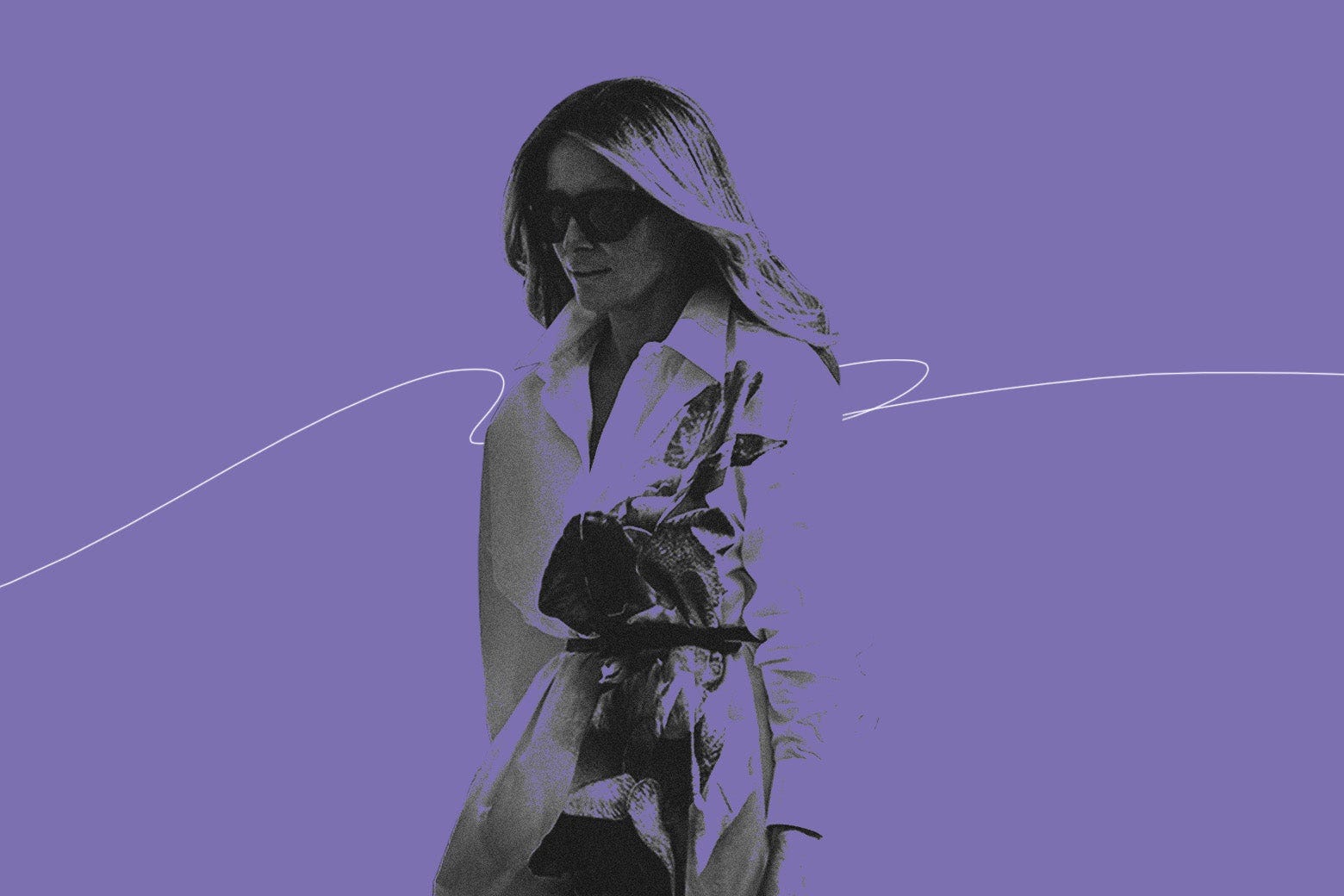
#3 “The Melania Movie is an American Obscenity”—Mother Jones
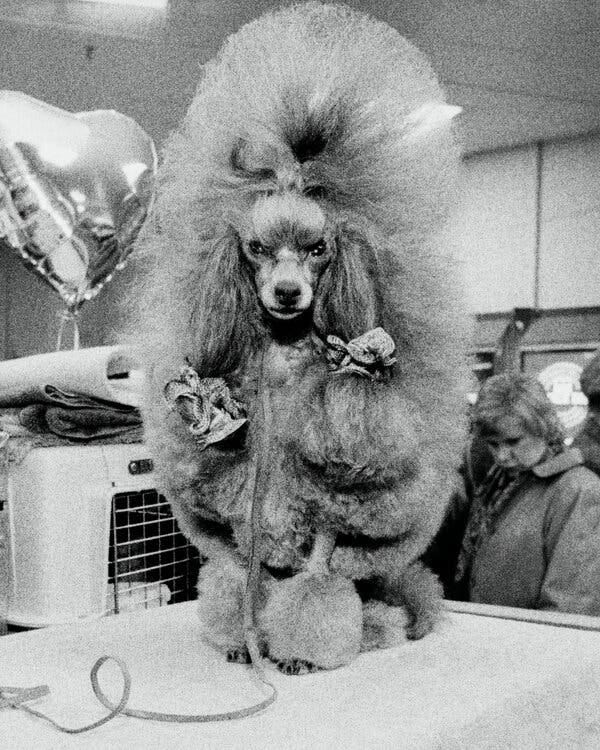
#4 Enjoy this reflection on a dog beauty pageant… because you need some cuteness in your life. The NYT has been cataloguing “Best in Show” dogs at the Westminster Dog Show for 150 years. —The New York Times
(And then watch “Best in Show” in honor of the late Catherine O’Hara 😢)
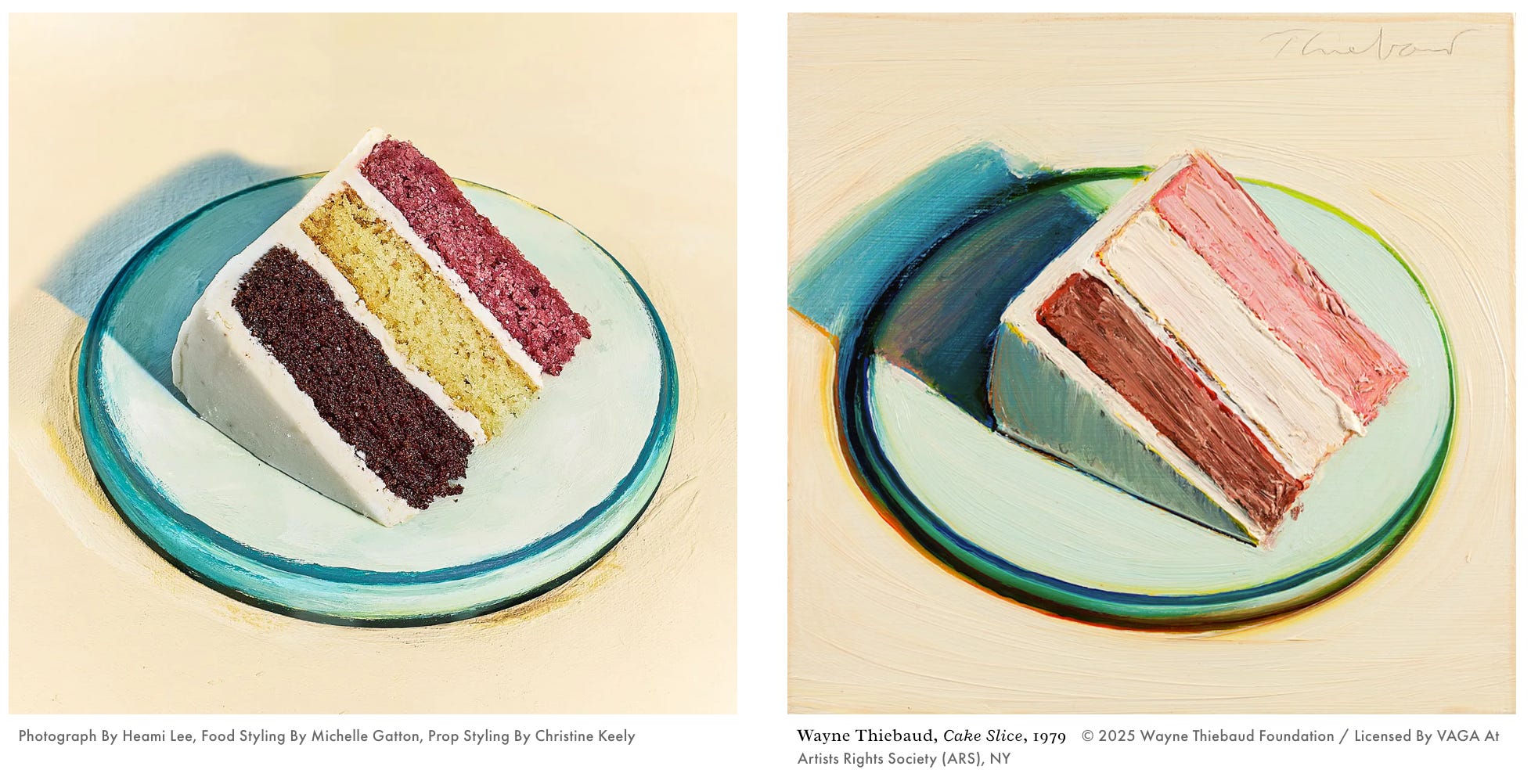
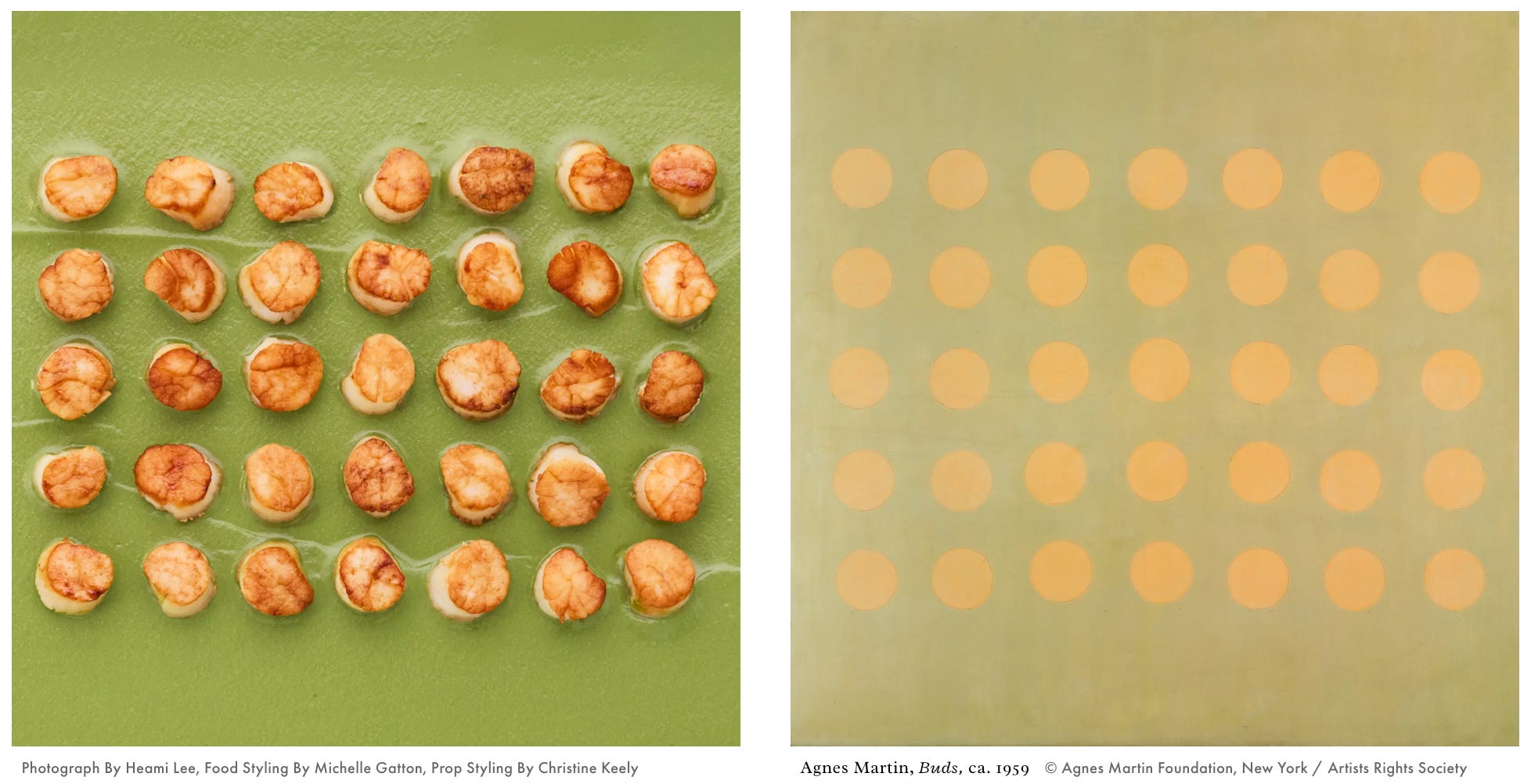
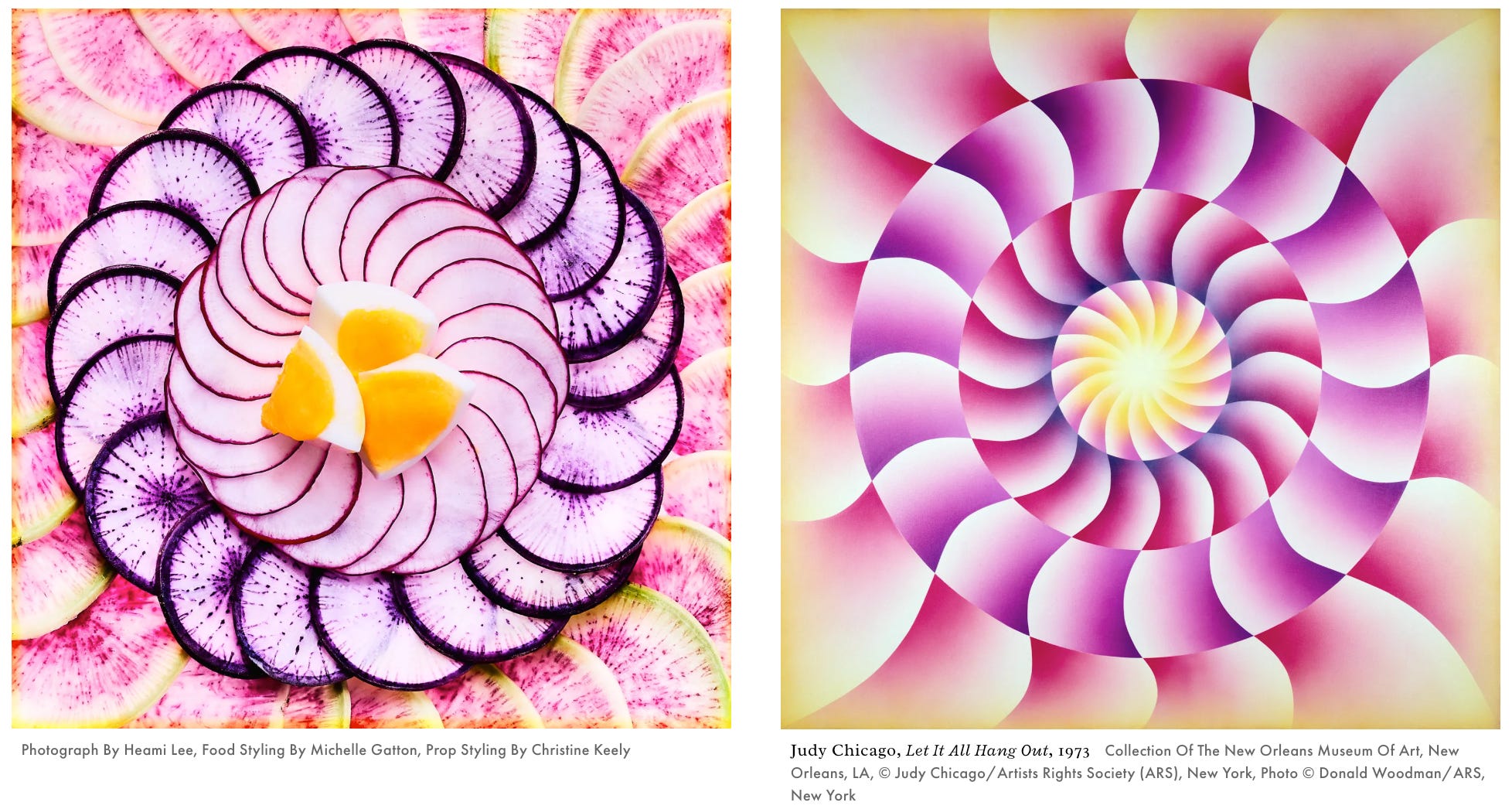
#5 How food writers turned MoMA artworks into recipes. —Bon Appetit magazine
“Radishes!” I shouted, the second I laid eyes on this piece by Judy Chicago. I was certain nothing else in nature could provide the same round shape and bright, bold color. But radishes alone do not a recipe make, so I set out to create the rest of a salad that would make sense hidden beneath a shingled radish roof. After playing with a few components, I decided that the radishes (cut in a few different ways) could carry the team, alongside torn boiled eggs, briny olives, and a punchy mustard vinaigrette.
Just for Fun…
Note: this is satire, Republicans… or is it? —McSweeney’s Internet Tendency

Just yesterday, I was in the neighborhood of the sprawling campus that is Focus on the Family. As I made my way to where I was going on the backside of the east side of all those huge red brick buildings, a black and very fancy Mercedes left the area at a high rate of speed, then swerved to miss hitting me. Thank goodness. I wondered who it was and why they had so much money as to afford such a car and why they thought they could drive like a maniac as they left that place so many think of as ‘holy ground’.
Then, and I have no idea why, I thought of the Epstein Files. Maybe it was because I had heard of a new dump of the files on the news. Then, I mused to myself about how I was almost certain that at some point it would come out there was some connection to Dobson and Epstein. I didn’t have to wait long. Within a few hours, I heard of this text exchange that mentioned Dobson in the files.
I am not surprised. I have lived, worked, and worshiped with so many over the years that were employed by this enterprise known as Focus on the Family. So often I heard these exact words as you included in this post about forgiving the abuser while dismissing the injustice of the abuse.
If Focus on the Family is anything, it is a money making enterprise where a few benefit from all the revenue it generates from those who think Dobson had all the right answers for the problems in their families and marriages. Sadly, all his words ever did was perpetuate those problems so they are carried into the next generation.
Great post. You write with great clarity and conviction based on what I see must be years of study and research. Thank you.
The part about "Evangelicals are famously bad at recognizing power dynamics." Seriously! Once seen, you can't unsee it.
Also, I am dying at that McSweeney's piece. Amazing. Chef's kiss. 😂