
the Empathy List #167: The Myth of the Christian "Third Way"
No, Jesus was not a Republican or a Democrat, but Jesus was political.

Hello friend, Liz here.
I have a confession: I am so sick of “third way” Christianity.
That’s how the evangelicalism I grew up within started, by the way, with Billy Graham filling stadiums and broadcasting the good news of Christ to as many watchers and listeners as the waves would allow. Because more important than any political party was the story of Jesus, and the way the story altered your eternal destination. The paltry ideas of politics couldn’t compare to eternity! (Except that politics is just how people live together… which Jesus is VERY concerned with. But we’ll get to that.)
Graham and others perfected a utilitarian gospel that stuck to “the basics,” just a few spiritual laws to emphasize for maximum kingdom growth, always rising up and to the right.
I grew up within that brand of American evangelicals—seeker sensitive (like a Bill Hybels church plant), intellectually rigorous (Wheaton College, Francis Collins, David French), culturally curious (CCM, Zondervan), occasionally prophetic (Jim Wallis), and most importantly, winsome (Tim Keller, Veggie Tales, the Holy Post podcast).
Living in the “third way” was a way of recentering on the values of eternity. Rather than embracing the binaries of Republican (yuck) or Democrat (yuckier), we, the chosen, could float on an imagined middle ground, far above the mud slinging of politics, our eyes fixed on the pearly mansion of God several hundred miles above the cloud line.
Does my definition of “the third way” still sound a bit wobbly and, well, purely Christian to you? Okay, let’s get more specific.
You’re a “third way” Christian (or used to be?) if you find yourself saying/thinking the following:
“The far-right and far-left are two sides of the same coin. They are just fundamentalist extremes with different, divisive orthodoxies.”
“Both sides have problems. So, I refuse to claim either party.”
“I’m pro-life from the womb to the tomb — so sometimes, the Right is mad at me, and sometimes the Left is mad at me. That’s how I know I’m doing it right.
“I’m not a progressive or a conservative. I don’t identify myself by any party. I’m a Christian and Christ is my King.”
“Political conversations are toxic. I don’t watch the news. The only way to fix our nation is through the long, humble work of discipleship in the Christian church.”
“The problem is the ‘us-them’ narrative. We are more divided and polarized than ever; this is why it is so hard for us to love our neighbor and why our politics is so gridlocked.”
“I am politically homeless.”
Recently, I discovered this fantastic article, published at ABC a few years ago—“If there is a “third way”, this isn’t it: How Christian centrists acquiesce to America’s broken political system” by Adam Joyce.
In it, he points out the flaws with the argument of American Christian “third wayism”: the discussion of how we engage in politics overshadows the actualities of policy-making.
Rather than discussing partisanship, the difficulty of dialogue and compromise, the need for discipleship and unity within the church, or the flaws of binary thinking, why don’t we Christians spend our time discussing actual policies that create a more just society? Why don’t we act to overturn unjust systems? Why don’t we put our feet into action doing the work of politics, regardless what our system of government looks like or what party we vote for?
Joyce argues that centrists, both in and out of the church, miss the geographic specificity of politics. They miss the context of space and time and bodies. Secular centrists “narrow… politics to the individual’s capacity for dialogue amid disagreement. Similarly, Christian centrists, with their concentration on individual discipleship and ecclesial counter-culturalism, don’t articulate how to fight for justice. While there are mentions of desirable policy, they save their specifics for how Christians should relate to each other and the ‘world.’”
And Joyce asks an important question: “Is partisanship really the problem?”
Is partisanship the problem that politics—and the church—is trying to address? No. Inequality of income is the problem. Prejudice and xenophobia is the problem. Racism and sexism is the problem. Injustice is the problem.
The problem is not Democrats and Republicans, not endless disagreements, but a system that undergirds inequality by default at every juncture. Our nation has been undemocratic since its founding because of its inherent institutional inequity that has, across our history, favored the rich, the white, and the male above all.
Joyce again: “…divisions are built. They are forged through material and social histories of systemic violence and those who resist that violence.”
In other words, yes, there are problematic divisions in our nation, but division by political party is not the heart of the divisions from which our country suffers.
Whichever party you favor, a vote cast for your favorites will not fix an unjust economic system built on the backs of the poor. Inequality is fundamentally undemocratic, a habit we are unlikely to give up without significant citizen mobilization against the undemocratic parts of our democracy.
And by the way, fixing the binary party associations within the Church will do nothing to fix the American obsession—displayed equally within both conservative and liberal churches, more or less subtly—with the hierarchies, greed, and militarization of the American Empire.
(Did you hear that our president just launched World War III? 😭🤬 We need to talk about Christians’ comfort with the U.S. military.)
The fact is, the “third way” offered by many Christian centrist thinkers does not lead down any path except isolationism and inaction (status quo). By sticking to abstract goals—justice, sanctification, righteousness—we miss the very real people in front of us and the very real actions we could do to help them.
Jesus unabashedly allied himself with the poor. By which I mean, he did not campaign for the poor, but he fed the poor himself. He gave them his own food, and he received their hospitality. He healed them with his own hands, touching their injured limbs and clouded eyes with his fingertips. He became a conscientious objector to the military empire of Rome and the empire of his own religion, not through abstention, but through indirect action.
I will write more about this in the coming months, but to give you context from the Gospels about how I interpret the indirect political actions of Jesus, I’ll summarize briefly: when Jesus said, pay taxes to Caesar, he meant, give back to Caesar the useless object of his greed and allow that greed to consume Caesar—because Jesus taught that greed impedes a person’s pathway to God.
When Jesus encouraged followers to show soldiers their “other cheek” after they’d been hit, he did so because a Roman soldier who hit a subject twice would face a penalty for his violence, thereby undermining the Roman system of policing.
And when Jesus rode into Jerusalem on donkey back, he subverted and mocked the royal ritual of the emperor himself, who claimed to be God and rode a horse into his capitol city while his followers proclaimed his divinity.
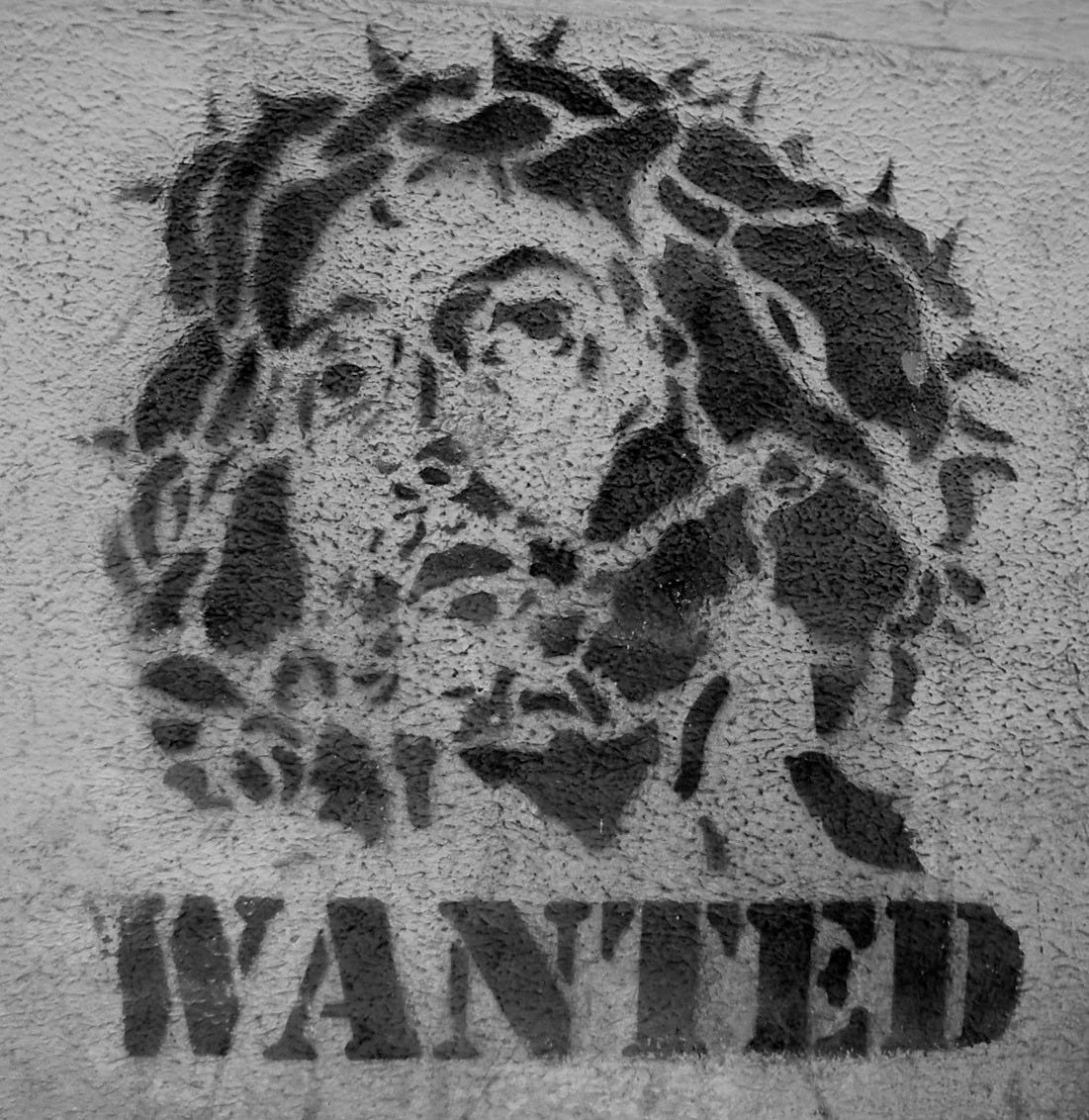
Which is to say, Jesus took a side.

I’m currently writing a book on protest. And, as it turns out, setting out to write a book about protest means you’ll end up writing a book about political action. So, no surprise, this topic is my current obsession!!
Throughout the writing process, I have come to care about the distinctions between justice and the “third way,” i.e. the Christian nonpartisanship that many prefer to binary party politics.
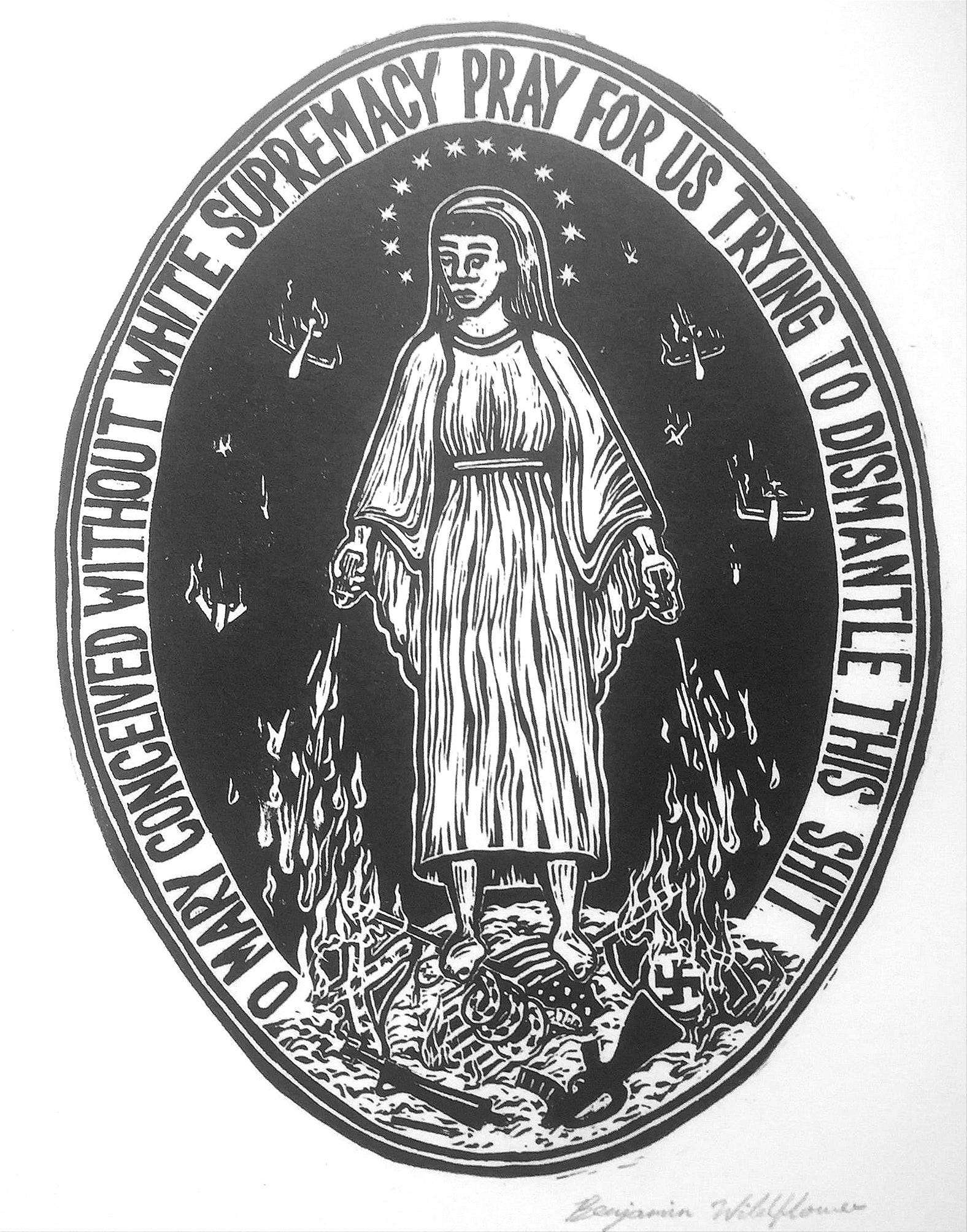
Though I’ve been a faithful church attendee for almost all of my life, I never learned the basics of protest, policy-making, or community organizing. There are many reasons for this, but the lowest hanging fruit is that a legacy of White supremacy in the White American church meant discouraging political action of all Christians for the sake of suppressing Black American activism for equal rights.
This was not explicit in my northeastern upbringing, per se, but it does undergird much of evangelical theology, unfortunately. (Not to mention, reactions against freedom movements in the U.S. reignited the Religious Right!) I believe this undercurrent of White supremacy still exists within the American evangelical church. I have also come to see political inaction as a failure of discipleship. I believe our White American faith tradition is poorer because of our determined complacency, which we call nonpartisanship.
As I’ve reflected on the complex individual and systemic circumstances that cause protestors or protest movements to form, I have come to believe that my church upbringing failed to prepare me for this moment in time when my own government is treating its own citizens and allies like enemies. In fact, my church upbringing hindered me from acting on behalf of those inside and outside of my nation who are being targeted by my government.
Yet I have hope. Though my church tradition got this very wrong, other Christians got it right. I still have so much to learn!
And I’m specifically learning right now from the Catholic worker’s movement, the Black American church, and the Latin American liberation theologians (who claim—with many Scriptures as proof!—that God preferences the poor). Each of these traditions demonstrate political action that seeks faithfulness to their IRL neighbors and to God through the means of advocacy, policy-making, and protest. As MLK says, “Peace is not the absence of conflict, but the presence of justice.”
Let’s keep learning together, my friends.
Now, for a brief programming note:
For the next three months, my presence here will be sparse as I finish up my book— my deadline is the end of May, so if you think of me, pray for me, please! I want to write something I’m proud of and I want to write a book that will be helpful and thought-provoking for you. That kind of writing requires intense focus from my wandering ADHD brain, ha! So, I will take a bit of a break over the next few months, and be back to my weekly publishing schedule sometime in June.
I will be telling you more about my book in progress in the coming months. Here’s the gist:my book tells the stories of women protestors in the Bible and in American history. I tend to write complex books full of disparate stories, books that make you think and feel deeply but do not tell you how to think or feel. What’s funny is, I started out trying to write the Christian On Tyranny, and instead, I’ve found myself writing a winding meditation on female political action. Shrug. Writers can only write what they write, I guess.
I do have a couple of Empathy List interviews in the hopper, so hopefully, I can get those out within the next couple months—one with Beth Allison Barr and another with Kristen LaValley. I’m also planning to interview Fr. Joash P. Thomas and Reverend Dr. Malcolm Foley in the near future! Good things are coming up, so stick with me, wouldja?
Thanks for your support, my friends!

Warmly, Liz Charlotte Grant
Just for Fun…
Eat the rich, State of the Union edition. (P.S. Do not actually eat the rich.) Read the Rest of the Essay

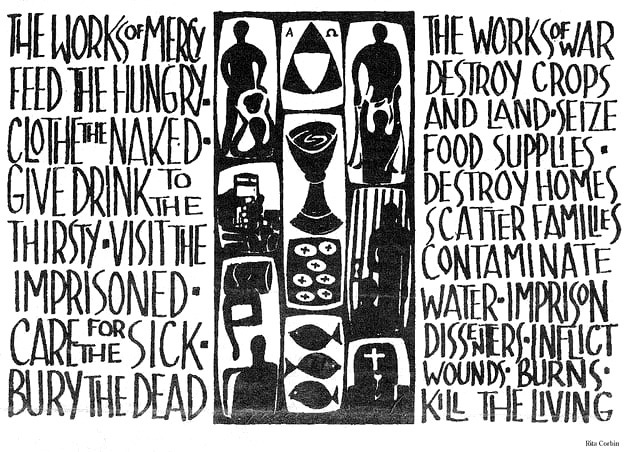
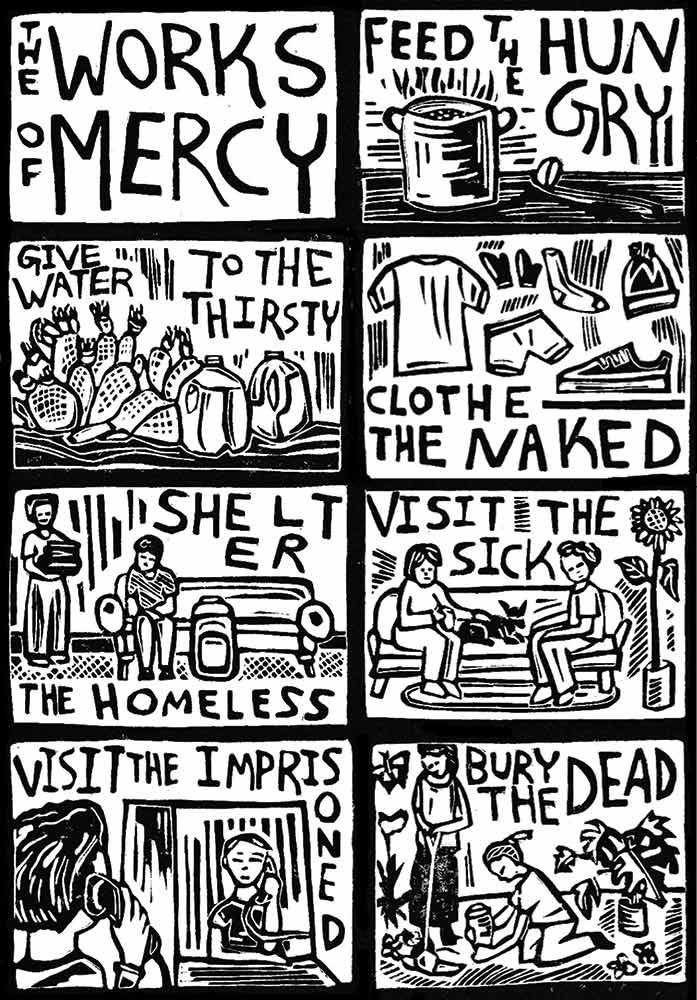
First of all, that art from Rita Corbin. 😍😍😍 And thanks for your thoughtful post here. Just want to say how excited I am for your new book project. Godspeed. 🙏 And all the grace to you as you lock into that ADHD hyperfocus!
I think I really agree with you, but I do think there's nuance sometimes. For instance, Jesus did take a side in advocating for the poor. But he didn't really take a side for or against the Roman Empire, though people tried to get him to take a stand. Give to Caesar what is Caesar and all that. All that to say that our task is complex, advocating for the vulnerable and growing the Kingdom of Jesus while not being drawn into opposing sides that are a distraction and would like to co-opt our attention. I think that's how the third way developed, and I still don't think the third way idea is totally wrong. The nuance is in determining when we are being co-opted and when the way of Jesus is taking a stand.
I agree that the way of Jesus is to stand with immigrants today, the march with protests against Jim Crow laws back in the 50's and 60's, to advocate for abolition earlier.