
the Empathy List #165: What's really happening in frozen Minnesota? 🧊
I asked my mom friends in MN to jump on a call so you can hear what it's like in their communities RIGHT NOW, IRL.


Hello friends, Liz here.
This week, I asked my Minnesota friends who had been posting about their communities and ICE to jump on a call. I’m sick of spin, of coverage, of takes. I just want to hear from real-life people about what they’re actually experiencing.
I need to know what’s actually happening from the mouths of people I trust.

A tearful and hopeful recorded conversation commenced. And today, we’re sharing it with you because we want you to see real people in their real lives interacting with DHS, and we want to demonstrate how Minnesotan families and communities are faring away from the gaze of reporters and algorithms.
The women who joined me are dear friends and colleagues: Elizabeth Berget, Laura Kelly Fanucci, Rachel Pieh Jones, and Maggie Keller. Many of these women are published authors. All are mothers and wives. Each has her own story of moving from conservative to progressive expressions of Christianity (though our conversation today remains centered on what their communities are experiencing, not national politics). Each is currently involved in churches, schools, and various communities within the Twin Cities, and many have volunteered to join mutual aid networks.
AND each woman also has a story to tell us about ICE.
Listen in:
(For those who prefer to read rather than to watch/listen, I have included a transcript at the bottom of this email.)
Can I ask you a favor? Would you use this video/post as a conversation starter with a friend who disagrees with you? Especially one who disagrees with you about how to interpret what’s happening in communities affected by ICE activities? And if you share it, would you tell me how it goes? You can DM me directly here—

I also have a bonus for you: my friend Leah (who did not wish to share her last name) sent in written responses to my questions.
This is Leah’s story of ICE in Minnesota:
I so appreciate that stories are being told. I was just reflecting on how seeing posts from other parts of the country and the world of people standing in solidarity with Minneapolis have been so powerful and encouraging. I think they have kept many of us going.
I would prefer to go by my first name because I am doing some sensitive work. And I may need to be vague about some of my answers for the same reason unless we were communicating on an encrypted email (which I now have).
I am just west of Minneapolis, in an inner suburb, about 9 miles of where Renee was killed. I go to school ten blocks from there for my Masters of Counseling and Psychological Services. Our school is currently all remote learning so I haven’t been in the area since the beginning of January.
I witnessed seeing a Somali woman taken by agents near my school before Christmas and I had an all out ptsd response. (My therapist has helped a lot but I am hypervigalent all the time. It is sometimes hard for me to put words to what I am thinking and feeling because I am so tired.) Days later, there was a report that ICE was outside of my son’s school and I started showing up to watch the school at dismissal. It was two people at the school before Christmas, me and one other mom, every day. I felt like I was seeing sitting ducks waiting in their cars outside of the school. I did see one probable ice vehicle one day but otherwise our school has not been affected directly since before Christmas.
In my community I have seen our group of people involved in rapid response (legal observers) and community care grow from about 20 of us before Christmas to nearly a thousand. We are a small suburb compared to others near us, and we are very proud to live here. When one of our beloved Mexican restaurants had an employee taken there was an outcry. The restaurant closed for a week or so (I can’t even place the timing right now) but it opened today and I expect it was packed.
I personally feel more connected to my neighbors because of this, many of us are involved in similar capacities. On Saturday night we got together for a candlelight vigil on our corner at 7pm and it opened up a sense of safety in me that allowed me to finally relax and cry.
But the bad is so bad. One of our neighbors was taken on Thursday morning. A family of four from Ecuador here seeking asylum. (Read their story here.) I received text messages while I was helping my kids get ready for school that multiple ice vehicles were spotted down the road. Because I am directly helping families, I cannot be a responder. I stayed on my phone watching messages come in as we slowly realized that the entire family was taken. There was a lot of confusion at first. Quickly I saw my friends step up and connect to those who could help including lawyers. They acted fast and got a court order for the family to stay in Minnesota, but they were sent to Texas within a day. Thankfully, the court order had an effect and they returned home at 2am this morning.
That same day, I was working with volunteers to get groceries to 11 families in the community. I think I was pretty numb by that point. We had to be sure our locations were off on our phones, I purchased a faraday bag for these sorts of things. Our instructions literally are to not have addresses on us in case we are followed or boxed in. I have had two volunteers be followed and are no longer able to deliver. We are doing nothing wrong. It’s wild.
Oh, and I genuinely don’t know what the media is getting right or wrong. I can hardly pay attention. Every time I turn it on I have a bodily response. I get my news from @Amandasmildtakes on IG and a few other social media outlets. Obviously the WH is lying.
Honestly, this fatigue is a level I have never experienced before. I hear POC saying that we get it now. If this is genuinely what they always experience we have not done enough to care for them. And I’m certain that is true.
Thanks for reading and engaging, my friends. Remember that mercy costs something. Are we willing to spend ourselves for the sake of our neighbors? I pray the answer is yes.
Warmly, Liz Charlotte Grant
What do the stories of these women evoke within you? What does the DHS presence look like in your community? Tell me your stories. (BTW I block trolls immediately.)
Transcript (unedited, with typos galore)
Liz Charlotte Grant, host: Here we go. Hi friends, this is Liz Charlotte Grant here, and this is actually our first empathy list video, anything. But I really wanted to hear from folks who were, and, and people that I knew who were in Minnesota right now because obviously so much is happening in your state and all of these women plus one more whose responses all actually just put in written because she just sent them in writing.
But my hope is to give these women here a chance to just talk about what they’re actually seeing in their communities. You know, one of the values that I hold at the empathy list is a sense of curiosity and also empathy for folks who are in the midst of what they’re going through, whatever that might be. And being able to communicate that to people who are not in the midst of those same things. And so like when I think about, you know, trying to reach across an aisle or just talk to a family member, sometimes it’s half, it helps to have these like very real stories of what’s actually happening.
So, that’s my intention for today. We have some really wonderful women here, folks that I’ve known through writing and also through actually Rachel, I’ve known for a very long time. From the first job I worked. Maggie, I’ve known from college. Elizabeth and Laura are both writing colleagues and I, I’m just delighted to bring you this conversation today.
So let’s just start out with who are you? Maybe give like a really brief, you know, here’s something I do, here’s my name and give me an idea of kind of where in the Twin Cities you are. So let’s start with Laura.

Laura Kelly Fanucci: I’m Laura Kelly Fanucci. I am a writer and a speaker. I’m a mom of five and I live in the Northwest suburbs of Minneapolis and my oldest two go to high school in downtown Minneapolis. So we are there a lot.
Liz: Yeah, I bet you are. Elizabeth, do you wanna go next?
Elizabeth Berget: Sure. I’m Elizabeth Berget. I’m also a writer and I live right down here in South Minneapolis. I live about eight blocks from where George Floyd was killed and another eight blocks from where Renee Good was killed. To kind of orient you there. I have three kids and yeah, we’re just kind of in the thick of it here.
Liz: Maggie.
Maggie Keller: Yeah, I’m Maggie Keller, also a mom to four. We are in South Minneapolis and we’re one neighborhood over from where Renee Good was killed. My kids go to school in the same neighborhood. Yeah, I, I work part-time at a church and I’m a seminary student in addition to all of this.
Liz: Rachel.
Rachel Pieh Jones: I am Rachel Pieh Jones and I also live in the northern suburbs. I have three kids, they’re all outta the house. My youngest is a junior at university and so that is interesting conversations with them as adults in this context. I also am a writer. I think I, maybe I said that already, but, and a PhD student in seminary. And so I resonate with a lot of your stories and I lived abroad in Somaliland and Djibouti for 21 years. And so that also feels relevant to this context having been an expat and some experience with Somalis.
Liz: It does feel unfortunately very relevant. I mean, fortunate for us to learn from you. Okay. You know, I just sent you a list of questions, friends, but the, the real thing I really wanna ask is, you know, what are you seeing in your communities? You know, how’s it affecting your families? What stories are staying with you? I think let’s anywhere in that, how about you? I’ll give you guys a chance each to just tell us what you’re seeing and experiencing from your part of Minneapolis.
And you know, to be clear, I’m really asking about ice raids and kind of how DHS coming to Minneapolis has affected each of these women’s families and communities that they’re in. ‘cause they’re all in unique communities as well. So, Laura, let’s start with you and feel free to take the time you need to tell us about it.

Laura: Yeah, I would say ICE is everywhere. You know, I see them all over the suburbs here as well as downtown. I have friends both who are US citizens and a couple who are not, who have been just staying home for weeks, haven’t left their house. Some with kids that haven’t left their house since, I mean, like before Christmas I would say I, a lot of stores and restaurants around us are either shut down because they’re, they’re understaffed.
Their staff has been, you know, the restaurant has been raided in a couple instances. Like the whole staff was just taken from a few restaurants around us. So we’ve been trying to go out and support, you know, especially immigrant owned businesses, stores, restaurants around us. But the, the doors are always locked. You have to, you know, knock to go inside. I see when I look around my church on Sunday, how different it looks. You know, a lot of brown and black folks are not coming to church. They don’t feel safe. We’re helping, you know, kids in our kids’ schools who need rides because it’s not safe for their parents to be leaving home right now.
Or because their parents are really worried about ICE showing up to the bus stops. So we’re trying to help out with that as well.
I mean, I see around us, I can always tell when it’s an ice like convoy on, especially the interstate because they go flying by at about 10, 15, 20 miles per hour. So you see them breaking all kinds of, even just traffic laws around us too. So in terms of like putting people in danger, it’s not even just those that they are going after or the bystanders, it’s literally any of us who are, you know, sharing the streets with them. On the flip side of that, like the incredible community outpouring of support, the mutual aid, the food donations, the way that churches and schools are showing up, like that has been incredible to see and to be part of.
So I would say it’s just, it’s constant, it’s draining. And that saying, that’s my perspective as someone who is not targeted because privilege and skin color I have. So it’s just a constant presence where we are, I think for all of us.
Liz: Thank you for that. Is there a particular story, Laura, that really stands out to you from what you’ve been seeing or hearing from friends?
Laura: I mean a lot and it’s one of them that really gets me is even just on my social media. I was asking folks to share stories ‘cause there’s so much misinformation out there and so much like vitriol that I just wanted more like you’re doing here, real stories in front of people. And someone I know who’s a a pediatric emergency room doctor was just saying how they’re seeing that families are waiting to show up. You know, they’re canceling appointments, they’re canceling baby surgeries. People who are, you know, kids who are sick and need surgeries, they’re waiting until much longer to go to the hospital.
So the pediatric intensive care units are packed and they’re not showing up to like the NICU to be with their baby. And I think that one really got me ‘cause I’ve had babies in the NICU and to just think those babies are alone right now because their families don’t feel safe going to be like that. They are so vulnerable that they can’t go be with the most vulnerable member of their family. That just haunts me. That’s just, yeah.
Liz: Thank you for sharing. Yeah. Hmm. Elizabeth, would you like to go next and tell us kind of what you’re seeing in your community?
Elizabeth: Yeah, I mean, I echo everything Laura just shared. I can vouch for and second all of that. You know, it, it’s interesting, there have been some days in the last few weeks where I’ll take a five minute ride to the library in past six ICE agent vehicles or suspicious looking vehicles and then other days where we’re not seeing them as much as they kind of move into different parts of the city. And so you’re just kind of always on this high alert of like, okay, is this gonna be a big day or a medium day?
And then in the medium days it’s like, like Laura was saying, like, we’re working so hard as a community to meet vulnerable families needs. So it’s just kind of that, that idea of constancy and the exhaustion in that even though I am not a victim, I’m not being targeted is, is a very real part of what life is like here.
You know, I think I know citizens who have been detained. I know refugees here with legal vetted status who have been detained and sent outta state already who are being revetted. I know people who are documented in here legally have been detained, you know, so and beyond that, like I know people who have been here over 20 years functioning, contributing members of our community, not a criminal record in sight who are being targeted, who have been detained. And so it’s just that narrative of kind of, oh, we’re going after the worst of the worst just feels very palpably and tangibly untrue.
It’s like, oh, you’re dragging my favorite taco truck lady through the street. You know, like, it’s just like, it’s, it’s just very, that dichotomy of those narratives is, is very hard to live in the tension of, you know, as, as someone living here who’s been very involved in mutual aid and care efforts, I mean, I’m on these signal chats and my phone pings literally from the moment I wake up to the moment I go to bed with people both expressing needs and those needs being met, which as Laura mentioned, is one of the most hands down, stunningly beautiful things I’ve ever been privileged to be a part of.
But it’s also like, for the very worst of reasons and in the very worst of circumstances, but it’s just that perpetual kind of reminder of this is happening, this is happening is literally on the desk in front of me, just ding, ding, ding all day of people who are going through the worst moment of their lives.
I think what’s been really interesting when I look at kind of the aid and care that’s being offered up by individuals and organizations and churches in the area, is it, it feels very much like kind of what I imagine the church and Acts two would’ve been like if they’d had signal chats. Like it’s just kind of, everyone’s like, here’s a need. And then people are like, I can meet that need. I can go shovel your walk. I can take your laundry to the laundromat. I can bring you food, I can take your kid to their eye doctor appointment. You know? So it’s just like everyone’s, and then there’s even, you know, there’s people who are just sort of like, I can show up and do these sort of basic human tasks that you are not feeling free to go do.
And then there’s also like lawyers who are working all night and day, contributing their special skill set, helping people track down people in detention.
There are midwives and doulas who are organizing home births with mothers who are afraid to leave home and go give birth at the hospital or their clinic. You know, so there are just like people showing up with their specific skill set and it just feels like everyone’s kind of contributing what they can. And the sum whole of that is this unbelievable organic network of care that I think is holding up so many in our city right now as far as, and, and, and I wanna just say like, these are not activists.
Like I think I, I I would not consider myself an activist. Like I’m pretty in tune with what’s going on politically. And I was that kind of kid that really cared about my inanimate objects in my room, you know? So I kind of have this like, bleeding heart from the day of my birth.
But like, I’m not, like, I mean, there’s certainly protesters and there’s certainly clashes We’re seeing that that’s, I’m not gonna say that’s not happening, but I think like most of us are just like moms who are walking around with whistles on our necks trying to make sure people feel safe. And I think that’s a, that’s a really underwritten narrative in all of this. As far as like stories that really stand out to me, a close friend nearby, she, she was already a notary, she just lives in the neighborhood here.
She was already a notary and started doing all this work for families to get like DOPA (Delegation of Parental Authority) forms in case like a parent was detained to name sort of a person who could legally make decisions for their child left behind or conting, she contingency travel forms, you know, she, she was started going out in the neighborhood just doing all this kind of work to notarize documents for vulnerable families.
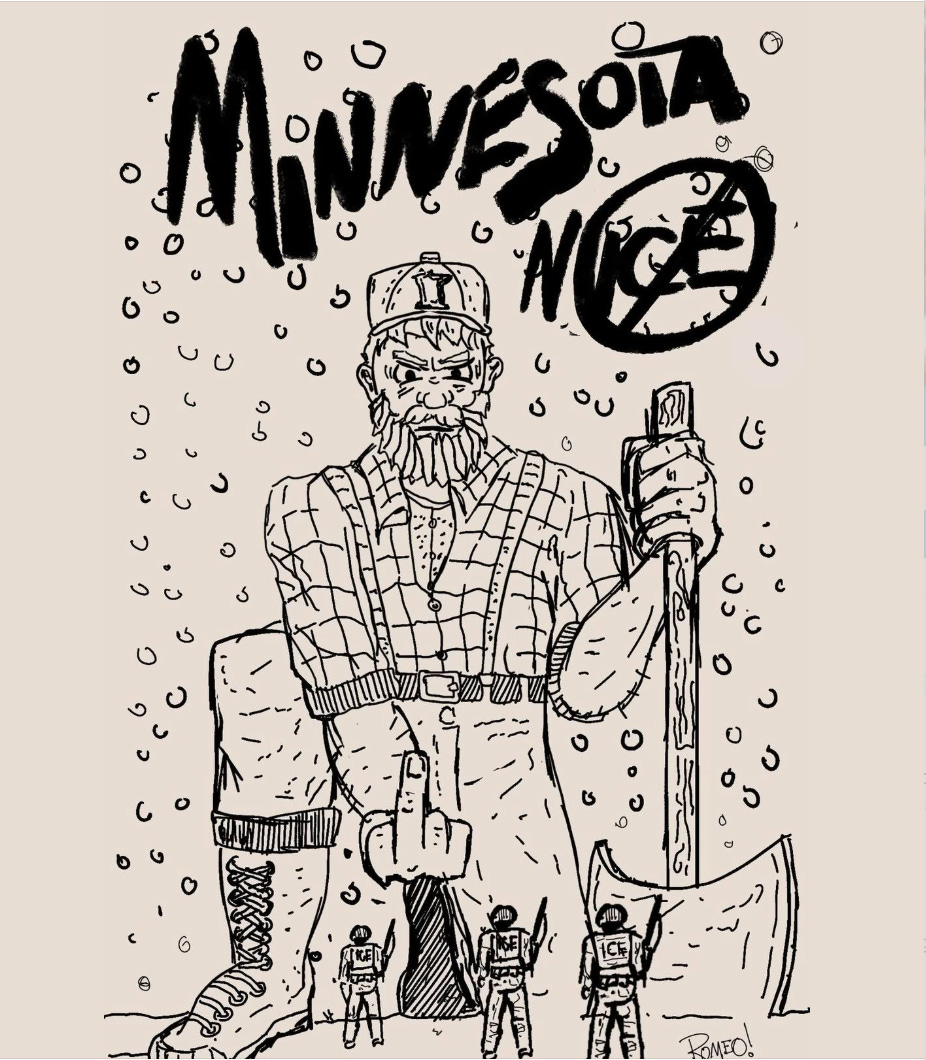
And as she was picking up her child from school, one day a another mom approached her and said, Hey, I need you to come to this house with me. Like right away a kid got detained and this was like two and a half weeks before Liam, you know, who’s rightfully all over the news and all over our screens. And this child similarly was out his six-year-old out with his father who was going to an immigration appointment following the rules, doing it the right way. The two of them never emerged from the federal building where they were. And so this mother is distraught, you know, she’s, she, and then this group of people that came around here are making call after call after call trying to find both her husband and her child.
And she can’t find him. There’s no database of minors. So she spent days not knowing where her six-year-old was, not knowing if her six-year-old was with his father or detained separately, not knowing if they were in the state. You know? So I mean, it’s just like that kind of tragedy. It is not a one-off. Like I feel like it’s just every day we’re hearing story after story like that of, of people just living through hell.
Liz: Gosh, thanks for sharing that. Yeah. Yeah. These are such heavy stories. I mean, I, I just imagine how heavy this is for all your families. Maggie, do you wanna tell us about what’s going on near you?
Maggie: Yeah, and something that Elizabeth said, I just wanna be really clear that, that the story that Elizabeth just told is why it matters that we call these kidnappings, the language and the words that we use, they carry so much weight. And I think at first there was pushback. I think even I felt it like a little unease referring to these as as abductions or kidnappings. But as a mom, if I didn’t know where my youngest child was for days, that is a kidnapping like that, that’s the definition.
And so I think, yeah, our words really matter right now.
Yeah. As I, I echo everything that Laura and Elizabeth have already talked about. The, the part that is starting to occur in our neighborhood now is, you know, I’m on the same signal chats. We’ve got the neighborhood folks who are checking plates and saying, yes, that’s ICE. No, that’s not ICE. ICE agents are now trying to blend in with the crowds. So ice agents are now wearing whistles around their necks just like we are. They’ve stopped wearing face coverings, they’re trying to blend in.
And I think that is so insidious and so terrifying that now we would not even be able to trust our own eyes. You know, like, what are we seeing? Can I trust that I know who this person is? And I think that has been especially difficult. So the other thing that is really important for me to say is, as a lot of people are, you know, watching videos and things, it looks like there’s just like little demonstrations happening all over.
And I just wanna set the record straight that that’s just what our neighborhoods look like. These are just people who are walking down the sidewalk, they’re going about their daily lives, and then out of nowhere there’s an ICE convoy and or, you know, immediately swarmed by officers. I feel like I’m living in the Gospel of Mark, where like Mark’s immediacy is like, and immediately this happened. Like that is what it feels like in our neighborhoods. Like it was quiet and then it wasn’t quiet. And the beautiful thing of course is that when an ICE raid happens right in front of you, you know, we’ve got thousands of people who were trained as legal observers.
So there are people everywhere who are ready to step into, you know, their constitutional right to be able to film and record and document what’s happening. And so that’s both beautiful and horrible because every photo and video I’m seeing looks like, like that’s, that looks like a staged protest.
No, actually it’s just people who were on the sidewalk when it happened and they pulled up their phones and they started recording. So yeah, that’s the horrible, but you know, as Laura and Elizabeth talked about, the beautiful is the way that our school communities are rallying. I am part of a network of parents at our school who are meeting, you know, individual needs. And I think the, the most beautiful example that I saw unfold in the group chat was a parent who needed medical care and couldn’t, didn’t feel safe leaving the house to seek it.
And other parents from within the chat group saying, I will come. I am a I, you know, I’m a physician and I will come and I will treat dad. And then we had another parent who said, you know, I, I work in internal medicine, but I’m on, I’m, you know, working the ER tonight. If it’s really bad, I will meet you at the doors of the ER and I will take you immediately back, you know, so that you are safe. You get handed from one parent at school to another parent from school and I will take you back to a private room in the er.
And it shouldn’t have to be this way, but I have been so encouraged to see the number of people, you know, really stand, stand in the gap is the nineties phrase that’s coming to me now for these really vulnerable families.
Liz: Yeah, that’s really fascinating. It’s, it’s not very “oligarchy” to have doctors come out and give their services for free, right. It’s not very capitalist. That’s really fascinating. Rachel, what are you seeing? And I’m especially like, if I get to poke and ask you more, I’d, I’d love to hear about Somali families, what that has been like.
Rachel: So first of all, I wanna say that all three of you have just spoken so well, it’s quite moving and I, so where I am, to be honest, I’ve seen almost nothing in my neighborhood. You could believe that there is nothing happening if you stayed home here. And I live about a half a mile from the Islamic Center or an Islamic Center. I did see one car about three weeks ago.
And so also my context is I’ve been out of the country for the last 10 days, which I left, I can’t remember when, but just a couple days after Rinne Good was murdered. And then I came back on the day that the faith leaders were arrested at the airport, we landed and I was in Djibouti for those 10 days. And so I feel like I’ve missed a lot, which might be why I haven’t seen a lot.
And that’s been really hard actually. The, the timing of this trip was challenging and I felt discouraged and confused and then actually was going to deal with a, a pretty significant crisis of arrests, deportations, and torture that was happening in Djibouti. We were trying not, not to deal with that, we were dealing with other things too, but that was happening there and we were doing some, some advising and some help and it just felt like this is, I, I don’t know how to hold all of this both in my body and, and then coming back not knowing what I was gonna come back to.
So that’s a real personal story, which is again, from coming from a very privileged position of being a white blue passport-holding American.
I lost my train of thought. Oh. But while I was in route on the airplane, I did use the Wi-Fi. I try not to on airplanes as a writer, I wanna write, but I got Wi-Fi ‘cause I needed to know what was state, what was happening. And I actually got a request from my publisher asking me to write a story about what was happening in Minneapolis. And so I used my layovers to do some interviews and do some online searching, and I was able to write, which felt like, okay, at least I can do something while I’m away. And so trying to use my words and now that I’m back trying to get re-engaged and so I feel like I’m still trying to figure out how to get re-engaged with neighbors and seeing what’s happening in my particular suburb.
So that’s kinda my, my personal perspective.
I, I don’t have a lot to say about what is happening besides what I hear. I will share one story that has it. I think it just to me highlights the power of networking. And even someone who is a little bit, feels a little bit removed and yet is present. Just yesterday I got a text from a friend who’s a chaplain in a hospital and she had, I dunno all the details, but she had met a priest and he had a parishioner who had been detained and transported to Texas upon arrival in Texas was somehow discovered that they were a legal resident of the United States.
And so they were just put out of the detention center and like, see ya, not even an apology, nothing and no money, no papers because they were, you know, taken. And so they, you know, get yourself back to Minnesota.
And so this priest had asked the chaplain who then texted me, do we know anybody who speaks a little bit of Spanish, who would be willing to fly down there to, with, you know, papers to bring this person back home? And so, you know, just activated a network that I have and found somebody and so I don’t even know who it is or what they’re gonna do. I don’t need to know. And then, and then the friend texted me back and she said, why does this feel like the Underground Railroad just trying to get someone home? And so it would be easy to say, oh, they’ve been released, you know, but they’ve been the, they’ve been taken, they’ve been traumatized, they’ve been having all this fear, what about their family?
And then having to come back. It’s just, I mean, those kinds of things I know are happening all over the place.
And so I think what’s easy to forget is that even, even if someone is let go again, there’s all this stuff that’s happened to them in the meantime that is not okay and that they have to then deal with and has repercussions that ripple out to their family members and their community for the long term. And I feel like the, the, once we get to a point of being able to think about recovery, that’s a long haul for people like, who have been through stuff like that. And so again, that’s something I know deeply from my own experience of what it takes to recover from traumatic experiences.
And so I’m thinking long term, this is a real big weight to hold.
Liz: Well, and, and really for not even just for, you know, the folks who have been directly affected, but like you said, their families, the communities around, I find it really insidious, Maggie, what you were saying about ice agents blending in now because that automatically means that every white person is suspect, right? All of a sudden, like, are you a ice agent? Are you a ice agent? Right? And and the the point there is suspicion. Anyway, I…
Elizabeth: Yeah, I would love to speak to that. I was patrolling at a nearby high school during their dismissal a couple of weeks ago and I was standing with a group of moms who I didn’t know, but you know, I I was just, we were kind of, there’s clumps of us kind of around the school building and this Yeah, this man came up to us and was like, Hey, you know, I live two blocks away. I’d love to get involved. Like, are you guys on like, some kind of chat and like all of us just froze, like deer headlights, like, you gotta talk to your neighbors man. You gotta talk to people who know you. Like we don’t, I don’t know.
And that’s just so un-Minnesotan. Like I can’t convey to you how un-Minnesotan that is. And particularly personally, I’m like, Hey, let me tell you about my deepest trauma on a pr our first meeting.
Like, I’m such an open book person. Like let’s talk first periods, right? And I just feel like, like this man, like we all just looked at him, we’re like, you got, sorry, you gotta talk to people who actually know you. We don’t know you. And I have a friend who was born and grew up in Poland. She spent some time in the U.S, she’s currently in the U.S living here. And you know, like that kind of thing is what her childhood sounded like under a communist regime of like, I don’t, I don’t know you, I don’t trust you. Like, and that’s just so surreal and bizarre to be living in that reality in this moment.
Rachel: Yeah. Can I add something about that too? I appreciate you saying that. And in, in Djibouti, one of my very good Somali friends, we were sitting on this hillside and this was several years ago, but some white Americans came up to us. We were coaching a girl’s running team and they started asking us all kinds of questions about the running team and asking her questions, her name, where she lived, how old she was. And she lied every single answer. She, she did not tell the truth, let’s just say that. And I asked her afterwards, why, why did you respond that way? ‘cause my Minnesota response would’ve been to say everything, this is exactly where I live.
This is my full name, these are my parents. And but you’re absolutely right. Like her, she said, that was so inappropriate for him to be asking me those things and so unsafe.
And so that is absolutely what other people have experienced. And so to be bringing that back here is, it’s just really, really hard to see. And I can recognize all those things from my experience, which reminded me, you had asked about Somalis. I just wanna say a little bit a thing of that I do have some several Somali friends who are American citizens who have children who were born here who have not left their house. As someone had shared that too, since the, the garbage Somali comments, which were at least six or seven weeks ago, they’ve canceled gym memberships, they’ve not gone out, you know, they’re getting food delivered, all that kind of stuff.
My husband’s gone down to the Somali Mall and it’s just, it’s pretty empty. I was there for one of the protests and it, at that time there were still people there, but now it’s very empty.
So all those businesses are suffering and you know, there’s just all kinds of ice around there too. So I know that there’s a lot of, yeah, just fear of people who came here because they were afraid. And there’s not, it’s not, this is the other thing that I think you guys all know this, but to be an immigrant or a refugee is not because your life was so awesome before. Like there’s a reason that people left what was, you know, their, their history and it’s not, there’s a lot of grief and trauma there too, because that’s, that was their home.
And so like recognizing all the depth of what it means to leave a place and then come to a place and not, and then have to be so afraid and unsettled here. It’s, it’s deep.
Liz: Absolutely. Yeah. I’m really interested to hear if you all have stories from schools. I know at least I think three of you’all have kids in local schools. I don’t know if they’re public schools or what, but kind of doesn’t matter, I mean, you know, it could be any of ‘em. But I’m very curious how your kids are interacting with this and kind of what this is like as being a mom and Rachel, you can talk to this with your older kids, kind of how you’re talking to them about these things if you want to.
But if any of y’all have thoughts on that, I’d love to hear.
Maggie: I’d be happy to go first. Liz, I, I’m gonna try to be so, so careful because our family’s doing so much direct mutual aid and so I’m gonna speak in some just loose terms here. But we give rides and my kids, we had to have a conversation with them about how to, like, first after the first week I was like, Hey, you can’t point out every time you see an ice vehicle, like on the drive to school, because our friends are very afraid and like, we can’t, we can’t be pointing that out.
That’s not, that’s not a good practice. And so, but after, you know, like I had to form a safety plan with my husband if I have children in the car and I, ‘cause what’s happening is, you know, sometimes people are just driving down the street and all of a sudden the vehicle in front of them stops and the vehicle behind them stops and they can’t move their vehicle.
Like, what do you do? And you’re witnessing a, you know, a raid perhaps you’ve got vulnerable children in the car. And so we, we formed a safety plan, but what we had to tell our own children is, if you see something, we’re gonna use a code word. You’re gonna tell me like what a clock you see them at. Because if you see them, and I don’t, that is not safe. And so it, it, that’s terrifying and has inspired in my kids a sense of hypervigilance.
And so we are now making decisions, like on Saturday there were these beautiful vigils that happened at 7PM. Everyone was encouraged to go to their block and stand with their neighbors and hold candles and sing songs. And what a beautiful moment to be in community. Our, our family had already received an invitation to go to a school and play bingo.
So I just went to my kids and I said, we have two choices here. And you get to make the choice. You do not have to show up as a helper, a protector. That’s what my kids call the people. Those of you who are running patrols around schools, my kids call you protectors. And so you don’t have to be part of that all the time. You can, we can have fun and we can find joy and those are, those are great lessons to learn when you’re in elementary school. But my middle schoolers are really struggling with that.
My daughter could not finish her day yesterday. And I went and got her and she just said, it’s so unfair, mom, it’s so unfair that we get to go home and feel safe and our neighbors don’t get to feel that way. And I don’t, how can I, you know, keep showing up to school and school doesn’t mean anything.
Like I got assignments, who cares? Like when, when my neighbors are feeling this way, how can I continue with my daily life? And so making meaning and making sense of the moment that we find ourselves in and leading our kids in ways where they are participating in what we’re calling the resistance. I’m using resistance terminology as opposed to protest terminology, you know, but showing our kids the balance for the sake of their own mental health. I don’t know what I’m doing.
There’s no parenting handbook for this. I dunno how to, how to do this. We’re making it up as we go. But that’s, those are the conversations we’re having with our kids.
Laura: That was beautifully said Maggie. And to echo that, you know, as I said, I have five kids, the oldest is 16, the youngest is five. So I have to make sense of this at all these developmental stages and I, I’m gonna really try to watch how I frame this ‘cause I just need to be really careful for the families we’re helping. But the kids have a lot of questions. Like both of their parents have totally changed the way we’re spending our time. You know, the way that our normal flow of like who’s driving where all of that is different.
We keep going and doing these massive Costco and grocery runs and taking them places and the kids, I mean like the fun of that has worn off. They’re like, one, one of my kids last night said, oh, you and dad are both here tonight. This is so great. And I realized we have not both been here ‘cause we’ve been running and doing all these different things with all these different parts of our life.
The kids are scared. They, they want to help. You know, my 8-year-old would not go to sleep the night before last. ‘cause he kept saying like, that family, you said that doesn’t have enough heat. We had been a local restaurant. We had been bringing a bunch of donations to their staff after they had been raided by ice. And we were talking with the owner and he was sharing that in one of the mobile home communities where some of his staff lived, that some of the folks, their, their heat had broken and they were scared to have somebody come fix it because they couldn’t trust.
So the owner, we were talking to him about like, you know, how to, how to get these folks safe and warm again because it’s literally deadly cold outside here. And my 8-year-old was like, couldn’t go to sleep ‘cause he kept saying like, could we make blankets?
Could I learn to knit? I was like, oh my gosh, this is the human condition of like, what can we do in the short term versus like, that would be cool to knit and learn how to make these things. We can’t do that this week. So I think it, gosh, like you said, Maggie, there’s no handbook for this. My, my teenagers will have friends over and most of them aren’t white. And when I hear them all say like, we’re going to Chipotle to get food, I’m over here checking to see like this is a real story. I overheard them and then I’m like, wait a sec, is that safe? And I literally opened the door to my office and I’m like, you guys, you, you can’t go to Chipotle right now because ICE is there.
They were there 20 minutes ago. I’m just gonna order pizza for you and I’m gonna go pick it up because I don’t wanna send someone out to our house.
You know, like, so the most mundane of things, not only are the kids, they’re seeing how their schools are responding and our church and their families and all of that. But it’s also this, like this is still their childhood and this is still their adolescence and they wanna do normal things. And all of that is like reshaped because of their safety, their friend’s safety. Like just everything that’s going on right now. So it is like bewildering and exhausting. It’s that like decision fatigue that, that so many of us would talk about in the pandemic where every decision you make, I have this like list of things I do before we go somewhere.
Like check this and check these signal chats and check that. So yeah, it’s just, this is just bewildering and, and I hope maybe the good side is like the, is it formative for our kids? I’m praying that it is, that they see this is how we show up, this is how we care for people. This is how we put our faith in action. That’s my hope. But I also feel like I have been a subpar parent on her phone a zillion hours a day trying to coordinate all this work.
So it’s like a really hard and like laundry dinner, I don’t, our house is a disaster. So it’s like from the dire to the most mundane, it just shapes it all.
Liz: I mean, who needs laundry? It’s fine. Just re-wear that. Elizabeth, were you gonna jump in? Please.
Elizabeth: Yeah, I don’t have like a lot to add. Also, I’ve been just like chucking cheese sticks at my kids for the last two weeks. Like, I don’t know, let’s get frozen pizza again. Like we’ve just, you know, I’m like, ‘cause I do, I feel like maybe up to like 90 to 95% of my free time has been really to be involved in trying to care for our neighbors and that’s taken a lot of forms. But yeah, my own daughter was like, mom, you need to get off your phone. I’m like, and I’m not doom scrolling, I’m like texting people and coordinating rides and coordinating food, you know, and I’m like trying, you know, trying to convey that to her.
But she sees the stress on my face and she’s like, I think you need a break. And I’m like, true also. No. So, you know, I think, yeah, the kids are watching and what’s been really cool, and again I’m gonna echo Maggie and Laura and trying to be relatively anonymous, but the church I attend as a contingent of the congregation really got involved in like food delivery and things like that very quickly realized like there are no hygiene products, there are no home and health products at these food banks.
And so one of our leaders had kind of heard of an idea of a hygiene bank that someone else she knew was running in another state and was like, well what if we started one? And so literally within, I mean I think within a matter of like six or seven days, this went from idea to like the first supplies going to families in need. Like it’s been just the most build the plane midair amazing, wonderful, chaotic experience of my life. Like being a part of helping this happen and watching donations pouring from literally every corner of the world.
We used Amazon, which is like mixed feelings, right? But like that was the fastest way we could do it without setting up all this financial oversight for donations. So like, let’s just call a spade a spade. But you know, so it’s like our, like within days there were whole classrooms of our church building filled with towering boxes.
I mean people are just so eager to help. And it was just really a beautiful opportunity to really include my kids in that work. It’s like, okay, we’re going back to church this afternoon and we’re sorting and we’re stacking and we’re breaking down boxes and we’re labeling and you know, counting, we were trying to kind of do like a loose inventory and it was really meaningful to see a couple of my kids really get into the spirit of that and like, can we go back tomorrow? Can I, can you just drop me off? I’ll just go back and keep doing what I was doing. You know, I mean I think that is sort of one of the thin silver linings in all of this is to see them see that they can be contributors in all of this in their own way.
You know, even as they have like, you know, my kids are old enough, they’re in middle school that like, you know, they know friends who are not white. They have, they’ve got good friends who are not white whose, whose parents are worried about being outta the house, who are citizens who’ve been citizens for generations but are of a certain ethnic descent. You know, and it’s just like, I think some of that’s really hitting home for them.
You know, they’re growing up in a pretty high empathy household. But I think this is just kind of helping expose them to a deeper layer of some of the realities of what life looks like for people who are being oppressed and who are being marginalized.
Rachel: I don’t have anything to add to the conversation about parenting, but what I keep hearing both in this conversation and in general is the cost of showing mercy. And I feel like for the American church, that’s been something we’ve been able to ignore for the most part. It’s really easy to believe stuff. It’s pretty hard and exhausting to act and to move into behavior change. And there’s a cost involved in that. And I, as I read scripture, I’m really drawn to the stories where you see that where someone has, has paid a price for showing mercy.
And I, I think what you said about, I forget who said it, but I, that you’re praying this would be a formative experience for your kids. I pray this would be a formative experience for the church. And I think it, I think it is in Minnesota, I see that happening. I hear stories of that happening of people starting to actually understand what it means to show, to, to feed, to clothe, to visit those who are in prison and do all that for Jesus in, in the least of these. So that is one of, that’s one of my heart’s cry for this.
Elizabeth: And I think I’ll, I’ll kind of tag onto that, Rachel, think one of the things that’s been really beautiful, and I’m, I’m trying to think of how to share some of these stories without exposing anybody’s business to the internet, but I have had people who are, would consider themselves like fully unchurched, non-religious go, whoa, the Christians are showing up. And that’s interesting to me even so far as one person saying, maybe I’ll go back to church after this.
You know, like, I mean just, and that, and not, not only just other helpers, but like people, families that we’re serving who are like, oh, you’re from the church. And I mean like it’s, it’s horrifying that that’s kind of a surprise, right? But I think your, your take Rachel, of how the cost of mercy is, is high. The cost of care is high, is not something Yeah.
We’ve historically been great at, in the American church and i, I I think that we are witnessing in real time, I don’t wanna make this combative and decisive, but I think Jesus’s name has been dragged through the mud pretty intensely by the American, by sections of the American church in the last decade. And it, it is encouraging to me, it feels like a shot in the arm to watch the church respond and say, wait, actually Jesus looks like this actually.
This is what the hands and feet of Jesus look like. I mean I think there that’s, I’m I’m eager to see the ripple effect of that as time goes on.
Liz: I think I just have one last question for you all. I’m just so grateful that you have shared and I think you’ve done a really good job of protecting your people as well. ‘cause I have no clue. So, you’re good. But I think my last question really relates to, you know, what would you say to people who are outside of, out, out of state and particularly folks who might kind of come with a particular political persuasion to the conversation, whether it be left or right, what are they missing?
Like what are we missing about what’s happening and what would you say to them about this moment in Minnesota?
Maggie: My mind goes to the practical right away. So I feel so lucky to have been the recipient of some legal observer training back in November. And so much of my training was stated specifically, this is the best practice that we learned from Charlotte, that we learned from Chicago, the whistles that everyone see that came from Chicago. And so the idea that we are learning every city that ice goes to, we get better, we get faster, we get more nimble. That is super encouraging.
And so for folks who aren’t in Minnesota, I have already found myself in conversations with people in Maine and people in Portland and people saying, get ready because the time to get, to get a group chat of your neighbors is right now it’s, it’s now. Because if you wait, no one’s gonna answer the door for you. No one’s gonna want to talk to you ‘cause they, because of that erosion of trust that we talked about earlier. And so now is the time to organize and now is the time to get trained on, you know, how to show up. And I just find myself saying, you know, do you, do you, do you need some training manuals because we could tell you what’s been working here in Minneapolis and we can get your city ready, but like we need people to take it seriously, you know, to not assume, oh, ice would never come here, they’re coming, they’re already there.
And so it’s time to, time to mobilize, time to mobilize folks.
Laura: I would totally agree with that. And I would say that I have been a person in all the group chats with the friends outta state who is like doing the same thing. Like, I know you all think I’m being chicken little, I am not, like Elizabeth said, I don’t consider myself an activist, like this is not my full-time job. I am not a paid community organizer. But you need to understand that everything is changing and any groundwork that you can lay right now to get to know your neighbors better, to really know, and I mean know by name the vulnerable people in your community, not just be like, oh, we have some of these people.
No. Like, to get to know them, to find out what they’re needing. That is the, the work that I think we all have to do right now. And I would say no matter where you live, immigrant populations in your area are likely living under heightened anxiety and fear of what’s going on.
So to be, you know, supporting organizations that are doing mutual aid to be like just patronizing your local restaurants and grocery stores, there’s ways that we have power with whatever limited money we’re spending out there that you can be like in solidarity with your neighbors right now. I, I just feel like the number one thing is that like, like several of us have said, this is just normal folks showing up to this. So I understand because I’ve watched how many countless tragedies unfold and you kind of think like, well I guess the leaders are gonna step up, or the people who do the justice work, they’ll do this.
Like, no, there comes a time where even if you don’t have the gifts and you have a zillion other responsibilities in your life, like the world around you is gonna break open and you are gonna have to figure out how to help people. And so I just think, yeah, whatever you can do right now to be a person who can get to know your neighbors better and to figure out who’s already doing this work in the community, like eventually that moment of crisis is gonna come right to where you are too.
Elizabeth: Yeah, absolutely. Both Maggie and Laura, I’m, I’m doing similar things in my personal life and my online life and yeah, that readiness and that knowing people you live next to, which I think is like, it’s so aligned with the gospel too. You know, like love your neighbors yourself. You can’t love people if you don’t know them by name. Right. I think I’ll maybe take a different approach to this answer. And I, I was telling Laura the other day, I feel like I have like a 45 minute sermon I could deliver on this. So I’ll just like funnel it down and do a, a shorter summary here.
But this is kind of my soapbox lately, is that I think so many people either outside Minnesota or even outside the like greater metro area, maybe like outstate Minnesota, more rural areas or kind of more politically conservative leaning folks, you know, they’re watching these horribly chaotic and violent scenes on their nightly news and they’re, they’re thinking like, why can’t these Minnesotans just let these agents do their jobs?
Like, why they’re getting in the way they’re putting themselves in harm’s way. And like, I can, I can empathize with that if you are someone who sees your way of life being threatened or you feel like your safety is being threatened, if, if that’s, if that’s a narrative that you feel is true, like I can, I can empathize with that kind of frustration with what’s happening here in Minnesota. But like what we’re seeing here is, is not people even so much as protesting, but like showing up as protectors and not just protectors of illegal immigrants or aliens as they’re calling them, which is horrible language, but like we’re seeing people show up because they wanna protect the rule of law In America.
We’re seeing people show up because they want to see accountability for federal agencies who are very literally brutalizing people every day in unnecessary and reckless ways.
They wanna protect the constitution, they wanna protect the right to do process. Like I think so many people here in Minnesota, we see ourselves as, as not just like leftist scum, paid agitators who hate everything federal government, but more like patriots. You know, like we’re trying to show up and just exercise our civic duty here to be good citizens and to perpetuate the American values of freedom, justice, peace, liberty. Right? And I just wanna like extend this, you know, I, I don’t know who will listen to this, but like, if you are someone who thought you wanted this, who thought you wanted mass deportations, and maybe you still do, maybe you wanna see every immigration law on the books enforced to the nth degree.
It still doesn’t have to look like this. It still doesn’t have to look like this recklessness and this violence and this fear.
It doesn’t have to look like this. And if you’re feeling that stirring to say, I don’t like this. This isn’t, this is, this isn’t what I wanted. I do want strong immigration laws. I don’t want, you know, I’m someone, I don’t want open borders. I would love to see heavy immigration reform in our country, like personally, but if you’re someone who really cares about immigration enforcement, but you are not feeling comfortable with what you’re seeing unfolding, it is okay to change your mind. And that doesn’t mean you have to go from here to here. It just means you can just scooch down the line and say, I’m not okay with this. And like, it’s okay to change your mind. And no one who’s maybe on the other side of that argument is gonna be like, what took you so long?
You know, like we’re just all trying to do our best to show up as people who love Jesus and are trying to discern what the best response is in this moment. End of sermon. That was, that was long. I’ll stop talking. That’s so long. I, I feel so strongly about that. Some of those things that we’re just hearing different narratives, we’re not even watching the same movie. And I, Van Jones said that, I’m not trying to steal his quote, but like, that’s such a huge part of what’s going on here and, and the crisis we’re seeing.
Rachel: Yeah, I would hear that. I would listen to that full sermon if you ever wanna bring it. That was great. I yeah, echo everything that everybody has said already. One of the things that I came away with from our, my trip to Djibouti just last week was in the middle of the crisis that was happening there, there was a real discrepancy between how the, I’ll just like to generalize how the western foreigners handled what happened versus how the African Christians who live there as expats, how they handled the crisis.
And we had many conversations with people and I thought, oh, this is like, we have so much to learn from our African brothers and sisters. And the same thing here. Like, I think it was Maggie who said, reaching out to people in other states, people who have already been through stuff like this, they know how to show up, they know how to take care of each other.
They know how to theologically wrestle with some of the complexities of it. And so really learning from our global and national brothers and sisters who have experienced stuff like this and then passing on the lessons that, that we learn here now to the next place where it’s gonna move on to, that’s something I feel I still wanna think more about that and reflect on the conversations I had and really have some practical takeaways from what they did differently that would be practicable. And then also, Elizabeth, I appreciate what you said too about, I, I also am a person who wants there to be deep reform of immigration reform in this country.
And I do believe in borders, whatever that means, by believing in borders. Like I believe that nation states have the right to protect and guard a border. And I have been someone who’s lived on immigrant visas for the vast majority of my adult life.
I just came back to the U.S two years ago. And so I, and I, I knew I had to submit to the laws of that country. They had every right to do things, but there was systems in place and I was never afraid of being, of having that system like ripped out from underneath me in a brutal and terrifying way. And so there are ways to hold onto a conviction about the right of a nation or, or law. And this is not how it’s done. Like all the stories that we’ve shared are just full of violence and fear and sowing of division that is absolutely unnecessary and, and damaging and causing then people who, like, again, like you said, Elizabeth, who are actually doing things lawfully trying to, you know, act in their rights as citizens to, to observe and to, you know, whatever it is.
I’m not as gonna be as articulate as you were, but it’s, it’s not, this is just not how to do it. And the long-term implications are also really dangerous, I think for the, for the fabric of community, which is being just shredded, well shredded. And yet also all the stories we’ve shared are showing that it is being rebuilt. Like if you’re gonna shred a fabric of community, it is being re-sewn into something beautiful and I think sustainable also.
Liz: Yeah, there is something really beautiful about taking something broken and mending it, you know, because, you know, and, and I know a lot of our black brothers and sisters have been talking about this isn’t the first time the state has exerted violence on bodies of citizens and non-citizens in our nation. And I think there’s just so much to be learned from our African brothers and sisters, from our African American brothers and sisters about what things have looked like in the past and how we can show up for our neighbors and neighborhoods today.
And we as white Americans are kind of slow on that bandwagon. You know, we’ve been, we’ve been slow to learn this because we haven’t had to. And what I’m seeing in your stories, friends is a willingness to learn that. And I commend you for that. I’m so grateful to hear the ways that these communities are coming together and also so heartbroken to hear some of these stories of folks who are in pain and have experienced that violence personally.
But I’m, I’m very grateful that you all are the helpers there and grateful for the work that you’re doing. And I will continue praying and asking how things are going and I just encourage anybody listening, share this with a friend. I mean, especially somebody who’s like, what is actually happening? I don’t believe, da da da da. I want you to be able to share this from people who’ve seen it with their own eyes. They’re there, they know these communities, they know these people, and this is, this is real life stuff that they’re dealing with in their every day.
Let’s just kind of dispel some of the misinformation and have some real conversations about what should love look like, what should Jesus look like in the United States? Like how do we live out the ways of Jesus and what should immigration and enforcement of immigration law look like? We need to just have some real conversations with people with whom we disagree in this moment and to make space for people to change their minds. So thank you all for joining me.
You are just gems every one of you and I’m just so grateful to know you. Thank you so much.
 | A guest post by
|
Thanks so much for this conversation. I’m sharing it with several friends.
Thank you for sharing 🤎