
Curious Reads: No Contact Summer?
Boomer parents are blaming family estrangements on therapists… again. 😮💨

Hello friends, Liz here.
#1 This week’s Top of the Fold is family estrangement—conservatives are once again freaking out about the break-down of the family, and this time, they’re blaming therapists. (Not the gays this time!)
The Wall Street Journal published an article recently (apparently drawn from the research of a recent Fox News op-ed) detailing how parents and a very select group of therapists and therapy researchers complain that young people are cutting their parents out of their lives because therapists are making them do it.
This story made me mad and sad. LIKE MANY OF YOU, I have had to make the terrible, difficult, and relieving decision to go “no contact” with a family member. (I’ll tell you more about it in a minute.)
I disagree STRONGLY with this article based on my own experience and the experiences of many people I know. My analysis is biased and primarily based on anecdotal evidence, which I’d argue this article is, too. I also think anyone writing about any topic related to therapy should admit their biases up front — which the reporter behind this article did not do — but alas, all I can do is tell you mine. So, anyway, you’ve been warned.
But before we get into it, here’s the article, so you can read it for yourself:
“Are Therapists to Blame for the Rise of Adults Cutting Off their Parents?”
by Elizabeth Bernstein at the Wall Street Journal (but because that’s behind a paywall, here’s the article at MSN)
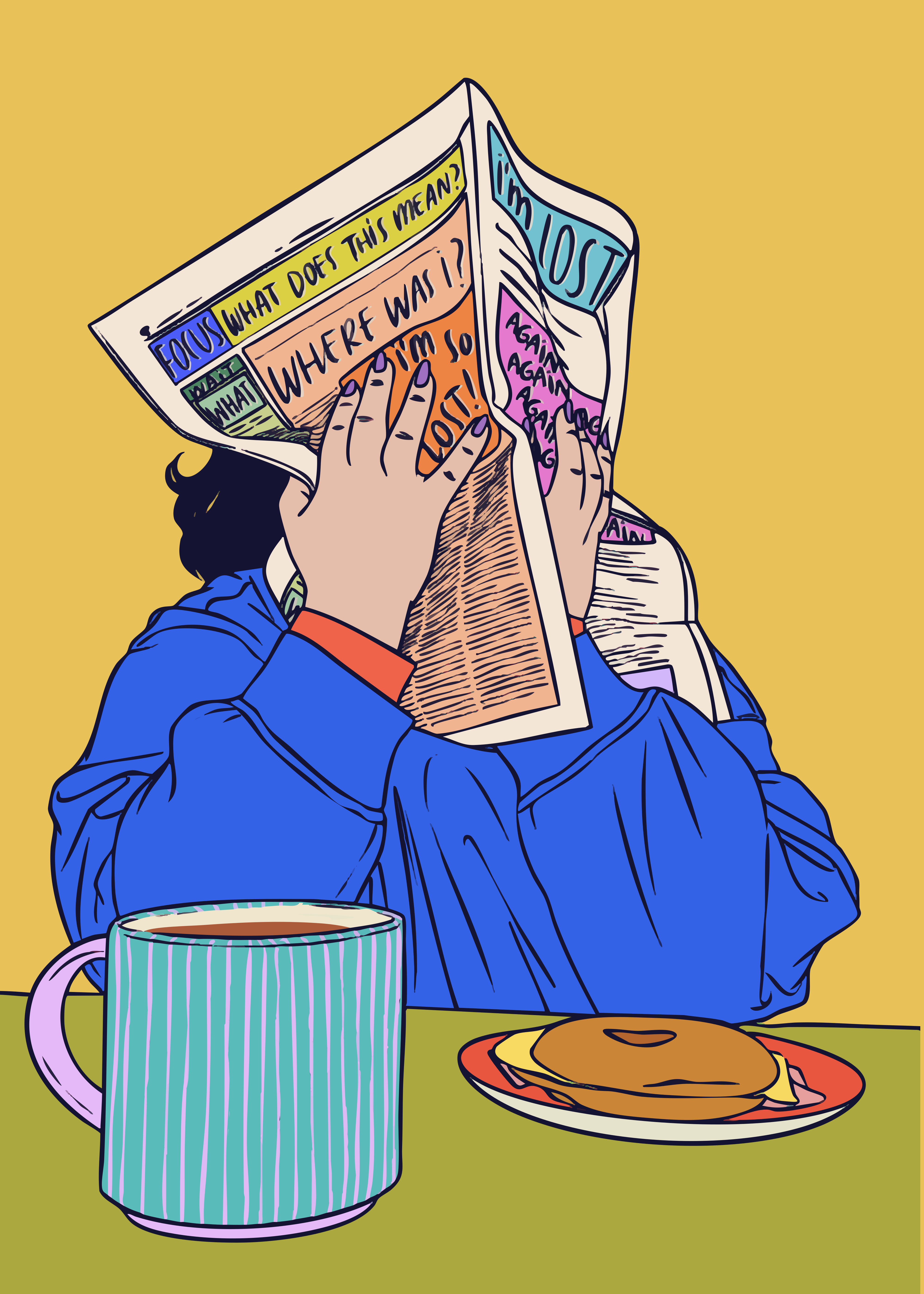
The Highlights
“Is it really good therapy to break your mother’s heart?” asks journalist Elizabeth Bernstein. (Counterpoint: is making this question your thesis really good journalism?)
That’s right, therapy is bad again. This time, parents (Boomers?) have decided therapy is the reason for their kids going “no contact.”
For decades, Bernstein asserts, therapists have spent hours teaching their clients to persevere in their intimate relationships, primarily through improved communication and boundary-setting. Yet now, seemingly out of nowhere, “they’re taking an opposite tack: they’re encouraging estrangement as a means of self-care.”
From the tone of the article, it seems that the journalist is implying that “self-care” is as bogus a concept as “mental health and well-being.” She’s seeming to say the whole thing is ridiculous—how could estrangement possibly be self-caring? How can you solve the problems of a relationship when you’re out of relationship with the person with whom you have problems?
Well, we’ll get to that.
Anyway, her thesis is based upon a singular survey conducted by a Christian marriage and family therapist in Massachusetts, Peter Anderson, who asked 7,000 parents estranged from their adult kids to explain why they thought the estrangement had taken place. The parents apparently told him that nearly 1/3 of these parents “believed their adult child’s therapist had influenced or recommended the decision to end the relationship.”
According to this therapist, “A lot of therapists are taught to believe whatever the client is saying at face value. They’re forming conclusions based on one person’s account.”
Plus, social media teaches these credulous adult children that everything is trauma nowadays! The implication is that parents are mostly doing a good job, that adult kids are too fragile, that what we as a culture once considered a “good upbringing” is now considered “traumatic” simply because a few influencer-therapists made it so.
As our resident expert Anderson summarizes, “People are coming into a therapist’s office and parroting what they hear on social media. They’re looking for affirmation for a decision they’ve already made.”
Instead of capitulating to the demands of the client, he argues, “Therapists should be questioning their clients’ estrangement beliefs, not affirming them. [Critics like Anderson] warn that patients aren’t always reliable narrators, especially if they have mental-health issues. And the therapist is hearing only one side of the story.”
After all, an estrangement from one’s parents, as another therapist argues, could cause more problems than it solves. “You are not solving the right problem, which is the mental-health crisis. And—this is the most tragic part—you may be encouraging them to cut off their best source of support.”1
Plus, what if your parent dies? Won’t you feel terrible then? Ever thought about that, you “ungrateful little bastard”? (Yes, this is a quote from a furious mother estranged from her adult kid, btw.)2
Show Your Work
I’ve already warned you that I’m an unreliable narrator.
So, I might as well tell you what I think of the claims in this article at the jump: this entire article is a bunch of bologna.
Let’s start with the faulty survey that informed the article’s thesis.
The results of this survey performed by Peter Anderson supposedly proves that that, among the 7,000 parents surveyed who were suffering estrangement, therapists are the reason adult children are choosing to cut off family members. Or at least, that’s what the parents believe to be the cause of the estrangement from their adult children. (And remember, beliefs are not facts.)
The main problem I have with this is that the journalist never cites or links to this survey throughout the entire article.
When you’re writing an article like this which makes many claims about wobbly social science theories and trends, you need facts to nail down your conclusions. Otherwise, the entire article reads as disingenuous and not credible.
In fact, I was surprised that an editor didn’t make this journalist show her work because the survey’s conclusion felt, um, a bit strange to me—who cares if parents believe therapy’s to blame for estrangement? Belief is not reality—and I wanted to check the results.
But, surprise! When I googled, I couldn’t find the survey anywhere, zero results. (I also emailed the journalist to ask about this survey; she has not yet responded.) I couldn’t even find a PDF on a therapist’s personal website. I couldn’t even verify that the survey existed at all, as no summary of the survey seems to exist on the interwebs either.
And since the journalist also declined to link to the survey’s author, I have no way for sure of verifying exactly which Peter Anderson, therapist in Massachusetts, performed the survey in the first place. (Although I did track down and email one Peter Anderson, anyway).
What I can tell you for sure is that the survey has not been published in any peer-reviewed psychology journal, or else I would be able to find it.
From what I can tell, the most likely candidate to be the author of the survey appears is not a social scientist. He’s a practicing Christian (faith-based) marriage and family therapist, which means he’s not an expert in survey-giving and data analysis. In fact, the obfuscation of the data, plus the possible identity of the author makes me even more distrustful of the survey results, as the journalist presents them. (Not to mention, biblically-based counseling methodology is not exactly known for its friendly engagement with the social sciences and secular academia, amirite?)
So, the entire thesis of the article is based on an opaque body of research that is inaccessible to any fact-checker who might wish to understand the claims for herself.
And meanwhile, the article makes some strong arguments, such as that no “scientific evidence” exists to prove estrangement’s usefulness to adult children who deploy distance in their familial relationships, all while holding up zero verifiable evidence for the author’s own “evidence” about estrangement.
Then there is the problem of sources.
To bolster her claim further, the journalist quotes a researcher who studied relationship-undermining language used by therapists with their clients (I believe he studied romantic partnerships, which is not exactly the same thing). The journalist also quotes a study that examined the statistical make-up of estrangement (but not the causes of estrangement). Both bits kind of support the claim of the article, but not really.
However, the journalist’s last source is the most problematic. The journalist quotes therapist Dr. Joshua Coleman, who has written several books on estrangement between children and their parents. Incidentally—or not so incidentally—Coleman walked through estrangement and reconciliation with his own children, which is what got him invested in the topic. You might disagree with me on this, but in my opinion, the fact that Dr. Coleman’s adult children estranged themselves from him—even though they did restore the relationship in some capacity—actually makes him less trustworthy as a therapist and expert because I suspect he would be more susceptible to bias. Unless his adult children played an active role in his professional platform, I believe we should approach his conclusions with a bit of skepticism. Especially because he, like many in Right wing circles, have called fellow therapists “detachment brokers.”3
But again, the evidence of any of these sources quoted by the journalist is only used to support the conclusions of the lauded survey that has proved to be impossible to find and fact-check.
My last factual problem with the essay is the question of statistics. Frankly, I’m mystified by the statistics highlighted throughout the article—for example, there are more accessible estrangement surveys that have studied why estrangement happens from both sides—so why pick an unfindable survey that only measures the beliefs of parents as the thesis of your article?

Well, funny enough, other studies don’t target therapy and therapists as the problem that leads to estrangement. As you’d expect, they tend to explain the causes of estrangement more broadly. Therapy isn’t the main cause; it’s addiction, conflicting values, manipulative behaviors, disagreements about religion and politics and sexual identity and race, abuse and neglect in childhood or adulthood, fallout from divorce, mental illness, conflict with other family members, lies and betrayal, etc., etc., etc. In other words, the whole range of human experience can cause the fracturing of relationships, even between parents and their adult children. In other words, these other studies approach the problem with nuance.
But a nuanced take, no matter how much truer to life, will never make good rage bait. And it certainly won’t make the parent afflicted with estrangement feel any better. No, better to deflect blame to the closest and easiest target: the adult child’s therapist.
From whose perspective?
However, I believe this article has a larger problem that goes beyond sources.
As an adult child who is estranged from her parents, this article reads as an apologetic for getting the estranged parent off-the-hook. (And it has me wondering, what is Elizabeth Bernstein’s relationship with her adult children like…?)
I would be very surprised if this article had not been written by exactly one of these parents, one of the mothers who is refusing to be an “estrangement doormat” any longer (another article by the same WSJ journalist, btw). These mothers cannot imagine that they could have played any role in the failure of relationship with an adult child, and so every word they utter about what is happening to them reads like an excuse to justify themselves while incriminating their adult child.
For parents like these, estrangement is happening in the passive voice—to them, not because of them.
They seem to believe that estrangement couldn’t possibly be an outgrowth of longterm relational patterns that the parent has established with their child since infancy. Even if though the parent was the only adult in the room for the majority of their relationship with their child, even if the child sat at the very bottom of the theological umbrella, somehow it’s still the child’s fault alone that the relationship has imploded.
Let’s assume for a second that the parent is at least partly right. Maybe it is mostly the adult child’s “fault” that the relationship is no longer functioning, say because of an addiction or severe mental illness that incapacitates the adult child from having any healthy relationships, let alone with her parents.
Okay, even in that scenario, I cannot imagine a parent deciding she is 100% blameless. It’s likely parent could take responsibility for not helping their child receive the therapy they needed to treat a mental illness earlier, right? Or for engaging in behavior that might have unintentionally led an adult child toward that path? Or for being unaware herself of a genetic predisposition, knowledge which could have helped or prevented the problem for their child?
It’s troubling to me that an entire group of parents can feel justified in saying that they have raised their children good enough that, in their adulthood, their children should have nothing bad to say about them ever. (I certainly expect my adult children to critique me and my parenting in later years! I think that’s NORMAL.)
Who is more emotionally fragile in this situation, the adult children or the parents who cannot face their potential screw-ups? And if adult children cannot even bring up ways that their parents may have harmed them in conversation, then is it any surprise that they exit the relationship that one party refuses to work on?
Reading an article like this makes me want to ask, why is it so impossible for these parents to imagine that they might have done something wrong?
What is estrangement supposed to accomplish, anyway?
According to this article, the goal of estrangement could be one of two things:
Either estrangement is a secret, manipulative plot on the part of the “detachment broker” therapist, who likes to break up families for kicks and giggles (in which case, the adult child can later claim, “They made me do it!”),
Or estrangement is the selfish, deluded game of the cruel adult child, who views estrangement as the last gasp of individuation, a power move they make as an act of vengeance against the people who made them. (“And I’m taking my inheritance with me, too!”)
This is not reality, friends, at least not according to the available data, which tells a very different story.
In fact, adult children and parents estrange themselves from each other for a whole variety of reasons. (It’s not only adult children who practice estrangement against their parents, by the way, it’s universal across relationships and happens most between fathers and daughters… which is how my estrangement started, too.)
For me, the reason was that I needed space. I struggled to set clear boundaries, both externally and internally with my parents, and before and after conversations with my parents, I suffered panic attacks that often overwhelmed me for days. Distance gave me a breath.
I did go to therapy about my family problems, as these parents seem to fear.
However, despite seeing four separate therapists over nearly a dozen years, none of my therapists brought up estrangement as a solution to my parental relationship problems.
I finally brought up estrangement after years of discussing my relationship with my parents. I brought up the possibility to my very last therapist, and I’m pretty sure she tried to talk me out of it. Then, we talked about the idea of estrangement for months before I made a move, and we continued talking about it for years afterward as I processed what it meant and the ways it had changed my life.
Do I think that some therapists may be encouraging estrangement too casually? Sure, it’s possible. But I doubt it. (Read one therapist’s take on why this reading of a therapist’s role is wrong.)
For example, the therapists I’ve seen personally and the ones I know in real life wouldn’t be fooled by an adult child’s one-sided account. No therapist believed me wholesale about any aspect of my childhood, and yet they were still able to cultivate an emotionally safe environment for me to process my past and present. (No one just talks about the past in therapy, either. But the past does give helpful clues to the present, OBVIOUSLY). In fact, my therapists’ natural skepticism actually made me feel safer because I never wanted to be 100% right; I wanted to be healed. And I understood that it meant that I needed to change to find that healing.
Therapists understand their role as helping people to change themselves. No one can change another person, and that includes therapists with their clients.
But therapists understand that conflict is often a means to change. Whether that happens in a client’s daily life or in the therapy room, a bit of healthy conflict (including disagreement) invites a client toward change. Sometimes therapists disagree with a client to help a client see their lives from a new perspective. No therapist will credulously trust a client’s story because they’re trained to see through any facades the client wears in order to push the client deeper toward what is true.
I just do not trust that the majority of estrangements are the therapist’s fault, and without evidence, I think it’s dishonest and harmful to tout this theory as if it’s fact.
I will also tell you, from the perspective of the estranged adult child who set the hard boundary, though losing my parents by way of boundaries has included much grief and mental health distress, it has also led me to find a deeper peace within myself. It was the right choice for me.
And I would never counsel my peers toward estrangement as the first choice. For me, it was a very last resort, a move I made after I’d already tried to have every conversation, set every boundary, and engage every avenue. (The one thing I did not try: group therapy. I just did not trust that my parents and I could do therapy together. The safety wasn’t there.) And I hope most adult children move as slowly and as carefully in their own relationships, because separating yourself from a parental relationship includes serious losses.
I finally made the move toward estrangement because I finally accepted that I couldn’t make my parents change. Perhaps that’s why reading this article stung. The assumption of the article seems to be that we, the estranged adult children, don’t want relationships with our parents.
But I can tell you from experience that we do. We want a healthy relationship with our parents desperately. But we can’t build a relationship by ourselves. A relationship requires partnership. And without our parents taking responsibility for their own part—their own failures, biases, and foibles—and without an acceptance and willingness to change, there can be no relationship at all.
So, when someone has plugged their ears, how do you make them listen? Sometimes you go silent.
Thanks for reading, my friends.
Warmly, Liz Charlotte Grant
Would you let me know if this article and analysis resonated? It is a tender topic for me and for many of you, so I’d be grateful to hear your thoughts, too.
More Curious Reads

#2 Christian masculinity doesn’t have to look like this. —Sojourners
#3 GOOD NEWS: the Jetson’s flying electric car is almost here. Welcome to the age of the air taxi.—The Verge

#4 Cheese theft is big money. Read about some of the biggest dairy heists in the history of organized crime. —Longreads
“Food fraud is big business. People have been adulterating and stealing food for as long as we’ve been eating it—from smuggling to counterfeiting, hijacking lorries to run-of-the-mill theft. The World Trade Organization estimates that food crime costs the global food industry as much as $50 billion US a year.
…But the most stolen food in the world? Cheese.”
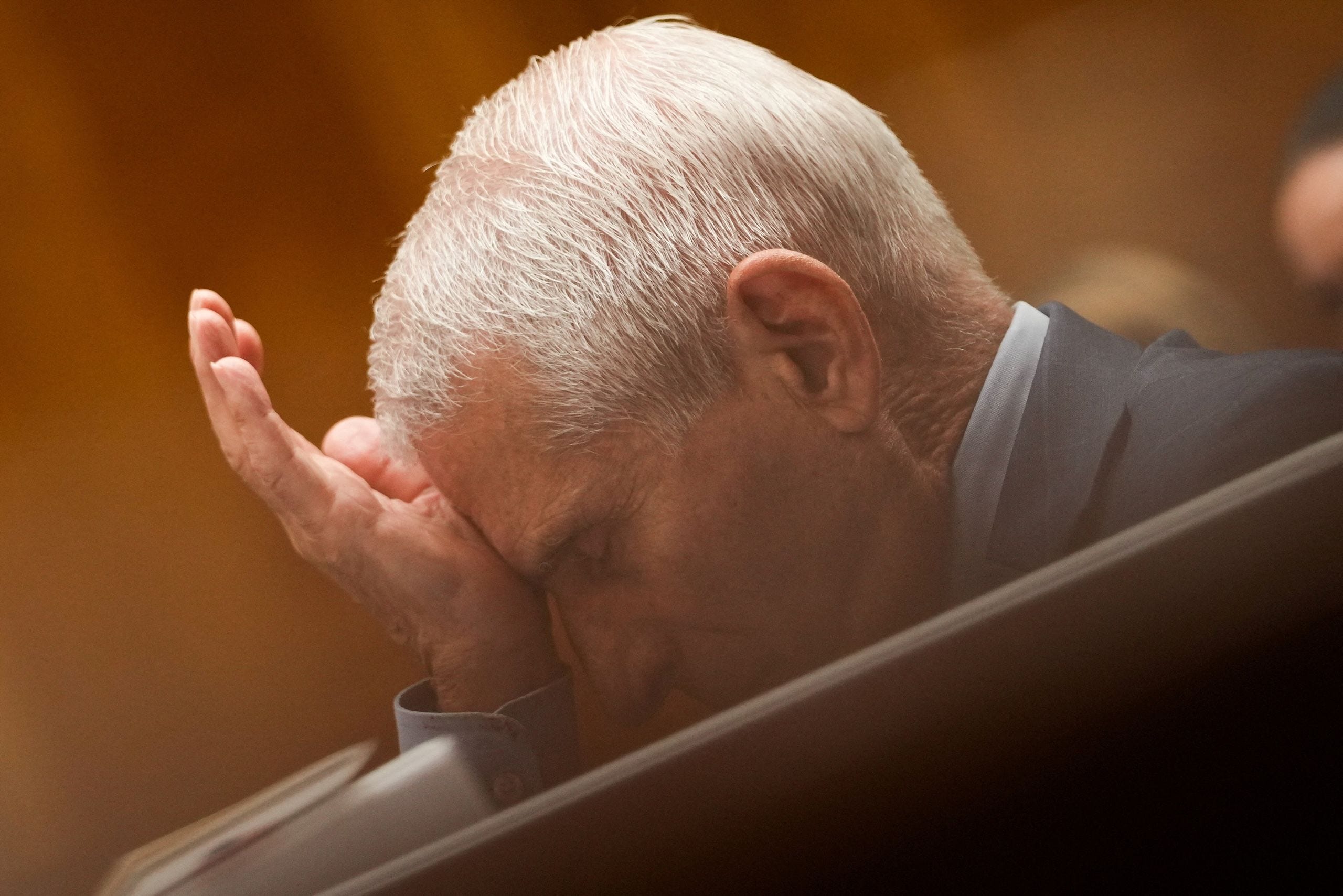
#5 We need to talk about Anthony Fauci’s diaries. —The New Yorker
“Anthony Fauci became a symbol of truth and integrity during the pandemic. In his diaries, he’s mostly talking about how he ‘butt called’ Barbra Streisand.”
Binge it…
Netflix just released a new Laura Ingalls Wilder adaptation of Little House on the Prairie, and it made me want to examine her legacy and the nostalgia America feels about this children’s book writer… and guess what? There’s a pod for that.

This comment makes me want to scream—because what if your parents are the cause of your mental health problems?? I guarantee that people who feel they could find help and safety in parental relationships are STAYING PUT. But I digress.
This particular estranged mother developed an entire social media platform around proving that she isn’t responsible for the estrangement her adult child is making her endure: “Were you a really good parent who did the best they could and yet your child has decided to be an ungrateful little bastard as an adult? We need to connect here. We need to support each other, and we need to talk about it.”
From my limited, non-expert perspective as an adult child estranged from her parents, I would call Dr. Joshua Coleman’s work a mixed bag. In an interview, Dr. Joshua Coleman encouraged greater understanding toward parents:
“These are the people who gave you life, and they deserve for you to spend some time on them. I think there’s an obligation that both generations have to the other.
“I do think the buck stops with parents. It’s incumbent on us as parents to show empathy, to take responsibility, to find the kernel if not the bushel of truth in our children’s complaints, to be willing to accept their boundaries and have a relationship that’s more in line with their ideals. I don’t think parents have the right to just say, no, I’m your parent, I get to set that, you have to obey me. First of all, it’s not going to work. But from the adult child’s perspective, I think there’s an obligation to say, I wouldn’t be here if it wasn’t for this person, there are probably good memories in addition to the bad, and I can give those greater weight than I currently am.
“…So my ask of adult children is to give your parent time to learn this new language. You are asking them to do something that other generations didn’t have to do, and it’s a tough skill set to develop. If you’re going to approach the parent with your complaints, don’t come in saying, you’re emotionally immature, or you’re a narcissist or a borderline. You’re not going to get what you want from them. It’s just going to be defensive. And you’re going to feel like that’s proof positive that you can’t trust them. So make it easy for them to give you more of what you want.”
I take issue with the automatic assumption that children are required to be in relationship with their parents simply because their parents created them. I also take issue with the assumption that adult children should expend all the emotional labor to help their parent to change, rather than that the parent could invest in healing for themselves without the adult child being on the hook to facilitate that change.
On the other hand, I applaud him calling on parents—and really every party in the relationship—to empathize with the other side. We need more of that.